Home Courting
More Than Just An Outdoor Squash Court Made Of Steel
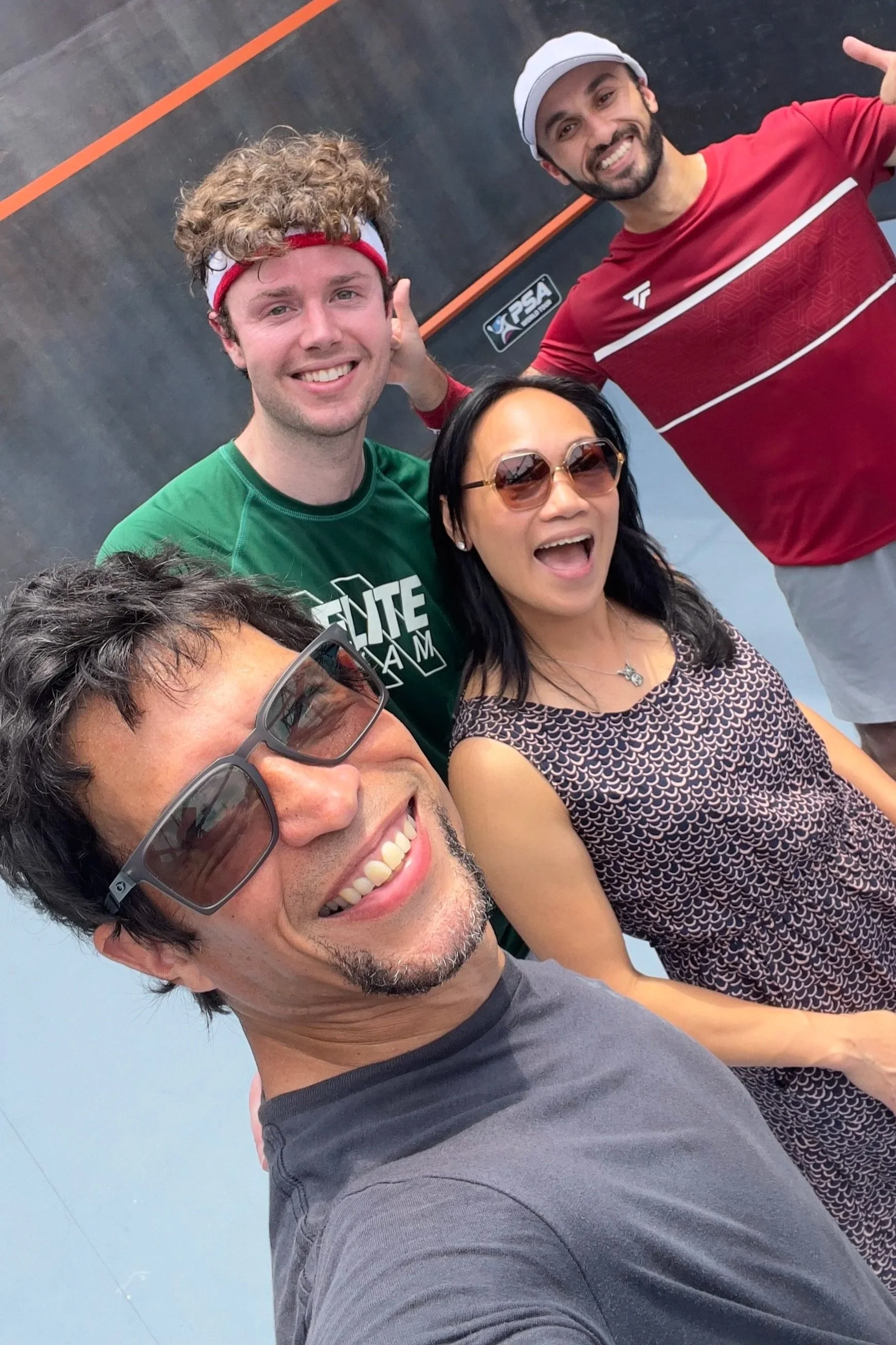
The Steel Court at Maspeth is my home court for squash. I grew up in New York City during the 70s and 80s, when there were over one thousand one-wall handball courts. (That number is well over two thousand today.) Back then, as the storyteller in me remembers it, if you were a serious paddleball player, there could only be one court you called your home court. It was typically the first park where you took the sport seriously. If you were dedicated and outgrew the local competition, the number of courts that drew your attention would increase. Much like the game today, you might have the opportunity to meet and even play legendary players on the most renowned courts, known for the name-preceding competition. Your skill set and enthusiasm, nurtured with players on your home court, conveyed how deeply rooted you were in your game. This line of thinking is ingrained in me. My first substantial experience with squash was nurtured in the middle of Vermont, back in 2007, and prompted by an insightful soul named John Illig (deceased). Yet Maspeth, Queens, is where I found a home court to play squash, enthuse the sport, and discovered a collective fit for squash in my overall game.
Our World Squash Day festivities in September closed out my 2025 squash season. My feelings about 2025, as a whole, have me easily moving on, having been in recovery from shoulder surgery for most of it. I began penning this from Hollywood Beach, Florida, as I mused over the notion of a “home court” having escaped NYC’s transition into Winter. While I’m proud of the traction we’ve garnered with the steel court this year, as we added two first-ever events to our small productions, a PSA Women’s Challenger and a Squash 57 event, doing so, while unable to swing a racquet or properly exercise this entire season of ours, muffled my excitement. But it also motivated me to find my way back to “fit”. Hollywood Beach seemed a solid spot to stay warm a little longer for more athletic reclamation and to look back on squash season 2025 with fresh eyes.
I Kept Coming Back
My past trips to Hollywood Beach have always centered around the Historic Garfield Street Paddleball Courts, home to the only one-wall courts officially designated as “paddleball courts” that I know of. I’ve been traveling to this location every year since 2008, and my first visit was back in 2004. This venue, just a few feet from the Hollywood Beach Boardwalk, is holy ground for me. One-wall racquetball and paddleball tournaments drove my visits to this spot. The number of tournaments held on these courts through the decades is innumerable. During the Depression, the city of Hollywood struggled to attract winter visitors. In 1933, someone thought two wooden backboards on Hollywood Beach would make it attractive for recreational tourism. The concrete walls were later constructed by the U.S. Navy during World War II for recruits stationed at the Hollywood Hotel, back then a naval gunnery school. More courts were added in the early 1960s to promote fitness and public awareness of sports. Any history of paddleball in the United States would not be apodictic without mentioning these courts. Generations of cultural dedication continue to drip memorial plaquettes onto the walls in sporting tribute. The type of paddleball that influenced the design and size of the courts is “Tennis Ball” Paddle or Panaball, as referred to by locals back in the day. The lines and rules differ from traditional one-wall courts. This variant of the game was meant to be played with a tennis ball and a wooden paddle carved from a single piece of wood, though Padel paddles are used by most of the locals these days. The small number of players who still represent the last remnants of this colorful slice of sports history call it “paddle” amongst themselves and will tell you it’s the “real paddleball.”

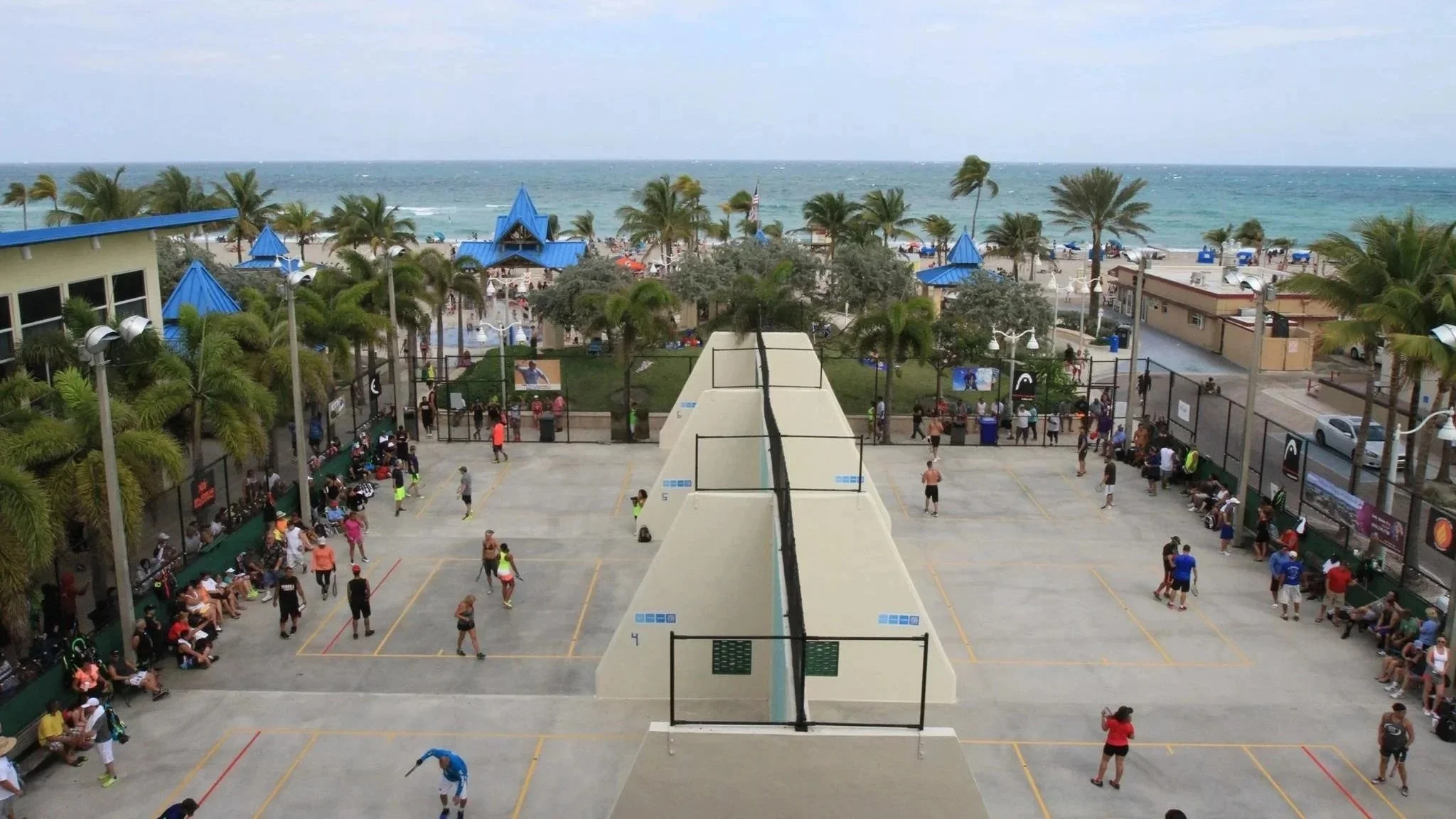


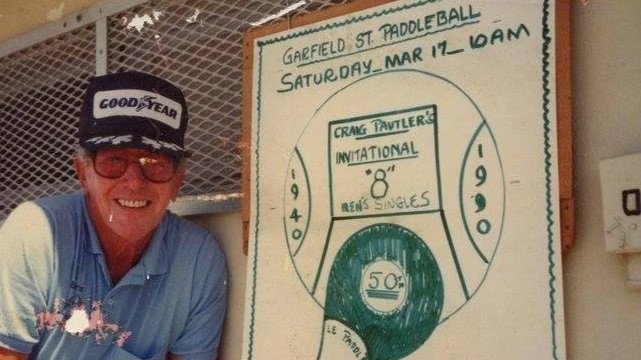

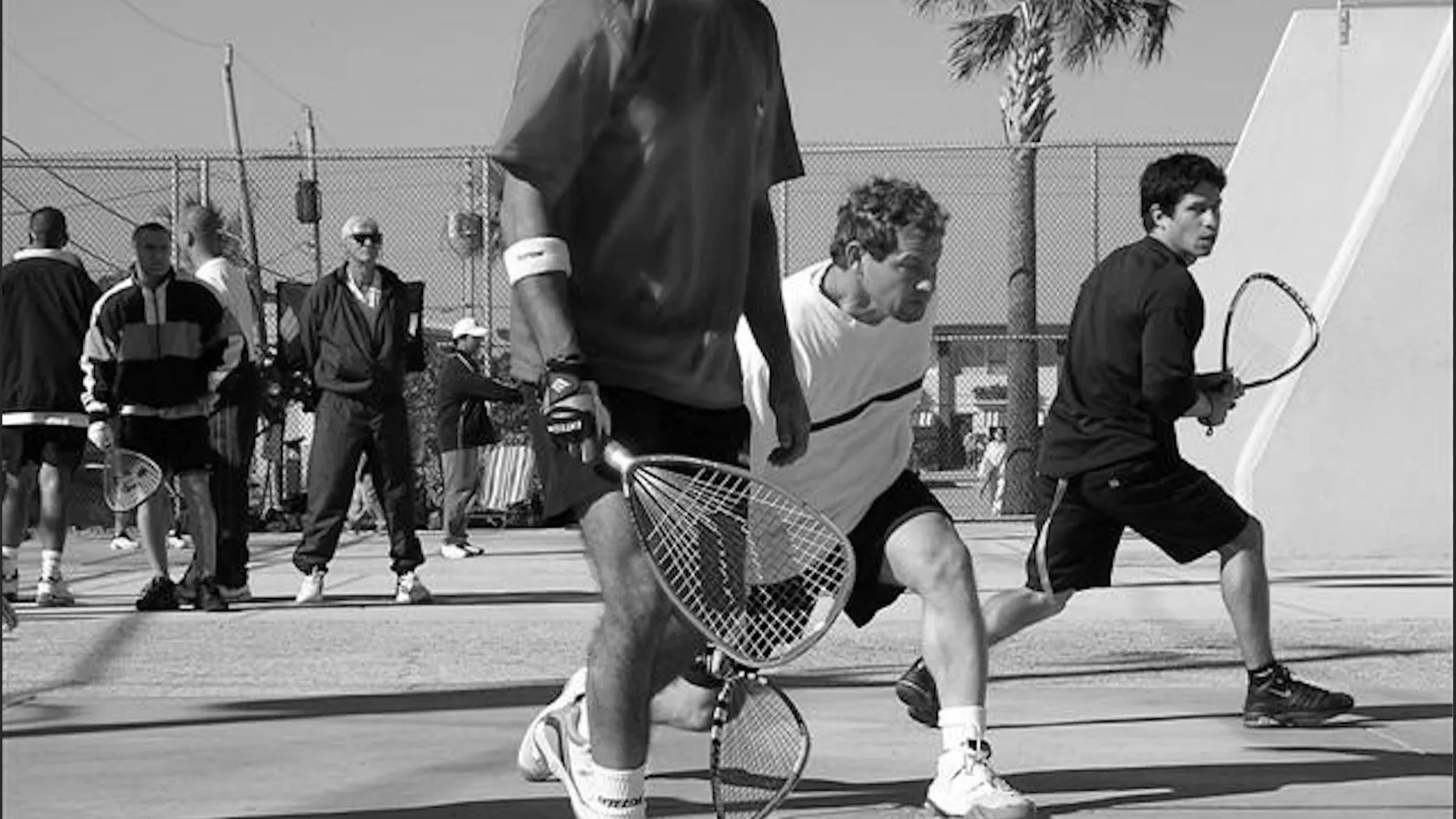

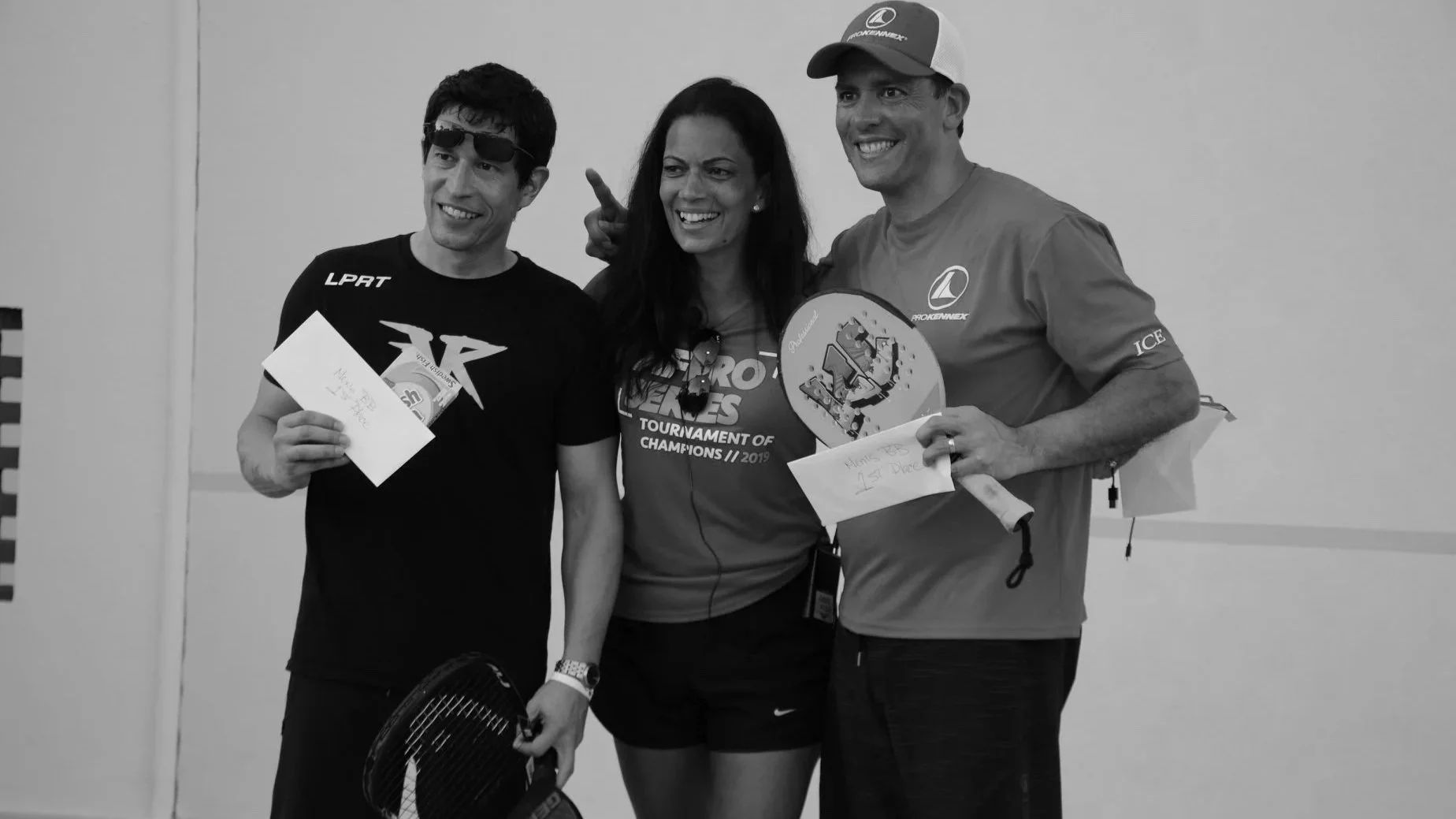
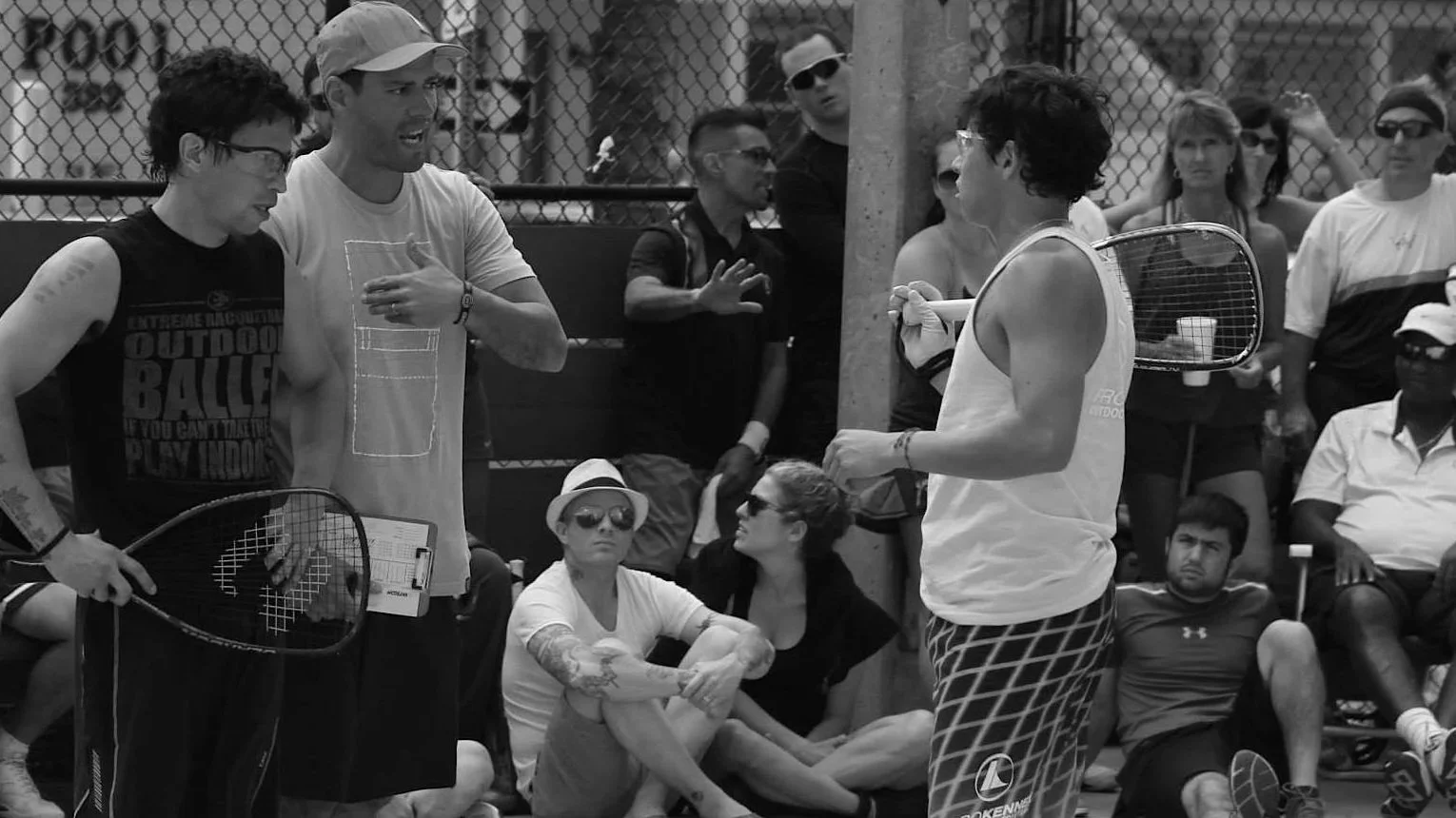
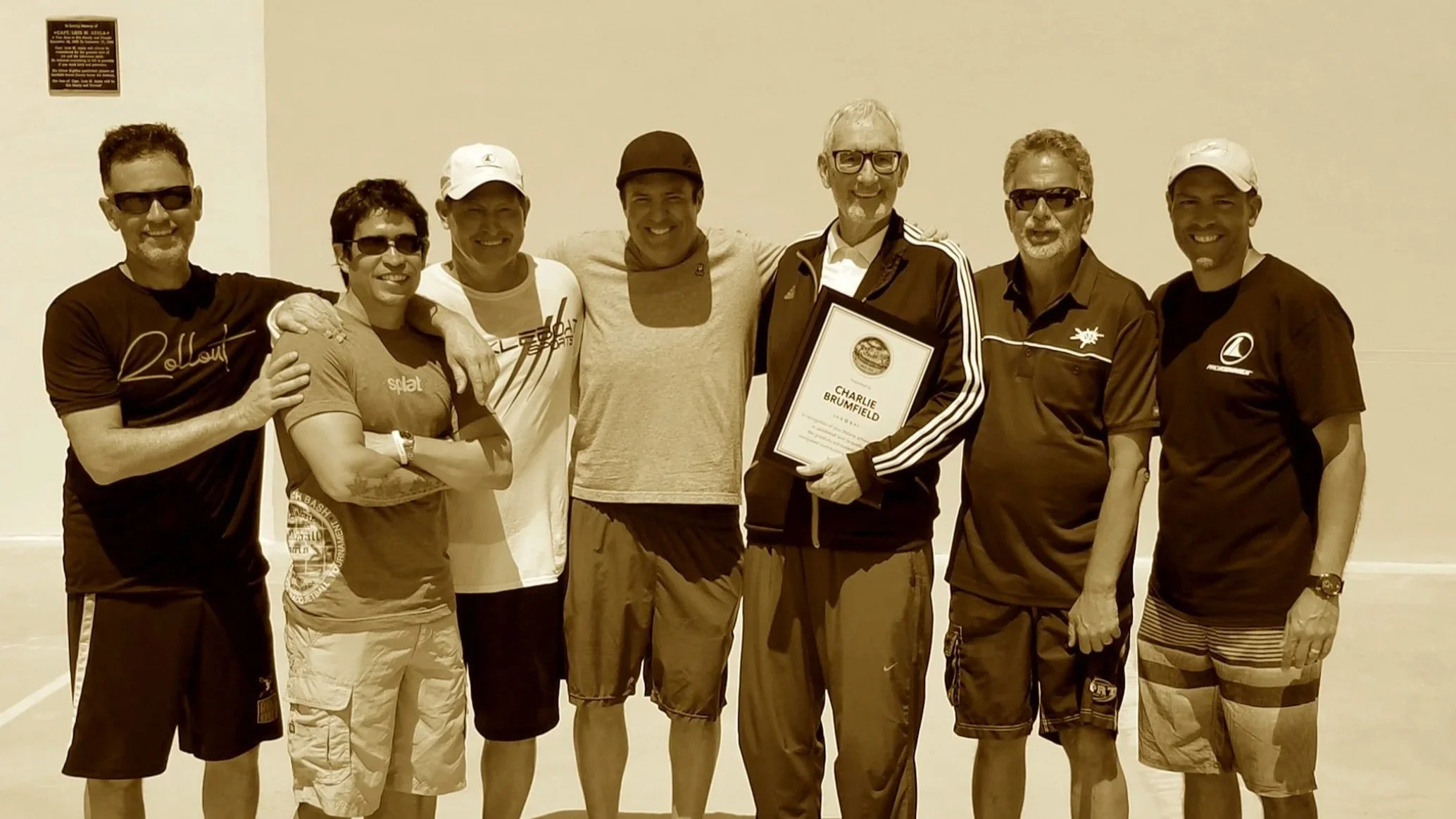

As mentioned earlier, I had my first experience at Hollywood Beach in 2004. It was December, and I took the trip to participate in the World Outdoor Racquetball (WOR) One-Wall Racquetball National Championships. It was a novelty event by a then-budding organization, now sold and tucked within USA Racquetball. The premise for the event was to aggregate the best professional racquetball and outdoor racquetball players in the country into one draw. Also unique to this event was the idea that a major One Wall racquetball tournament could be played with the rules in place for Tennis Ball or Panaball… the Garfield Court rules. The rule deference for the event was made by the event sponsor, in respect of Walter “Wally” Schmidt, who was an advocate and fixture at the historic courts for over forty years. Wally, who was a sort of local godfather, was still with us, as was his legendary pro shop - first just a van by the courts. The rule situation required adjustments from every player in the draw. No one complained quarrelsomely about the rules, but there were some complicated moments. Collect a swath of hyper-competitive alphas on any court with cash on the line, and you can expect some testy moments. This was the event where I solidified what type of player I was. I grasped the value of adjustment and practical patience. This event sparked well over a decade of cherished memories for me on these courts, bringing to mind my countless hours practicing alone as a kid. These aren’t my home courts, but they’ve held home court vibes for me for a long time.
In December 2024, during a racquetball tournament at the Historic Garfield Street Paddleball Courts, almost to the day of my first experience there, I tore my rotator cuff halfway through an age-group final. The resulting ordeal had me in a static, post-op condition for five months. (My first operation since having my septum deviated by a badly played relay, thrown from right field when I was 12.) It wasn’t until August 2025 that I was able to dive into comprehensive physical therapy, by which I mean, move my arm in any meaningful swinging motion. While our industrial steel garden-squash court provided an uplifting rehab lab on beautiful summer and early fall afternoons, the approaching cold weather seemed a solid reason to return to Hollywood Beach, this time, to heal and build on recovery gains. Never have I translated so much squash into my court time, and I couldn’t wait to hit the courts. My early experiences with squash were all about enjoying the commonalities with my one-wall racquetball strokes; relishing the subtle benefits I noticed seeping into the other racquet and paddle sports I play. This year, more so than any year to date at Maspeth Squash, our events had me regularly operating in proximity to a collective of young, hungry, yet influential squash professionals. It impressed upon me how high-level success in squash relies heavily on comprehensive fitness and mastering stamina. They practice a brand of squash you don’t own without a complete commitment to serious training and proper preparation before any time spent on the court, before even lifting a racquet. The nuggets of prep ideas I gleaned from some of these squash rats helped me ramp up my movements on the historic Hollywood Beach courts, providing a sense of optimism with my PT during this trip. I mostly reconnected with friends, hit the courts to work on upping my fitness level, and strengthened what feels like a completely new forehand. This return to Hollywood proved to be a respite from the cold and a mental reset for my overall physicality. At the end of the day, the distance and the return to this venue, under different circumstances, provided me a bit more clarity about our steel court.
Collective Steel Roots
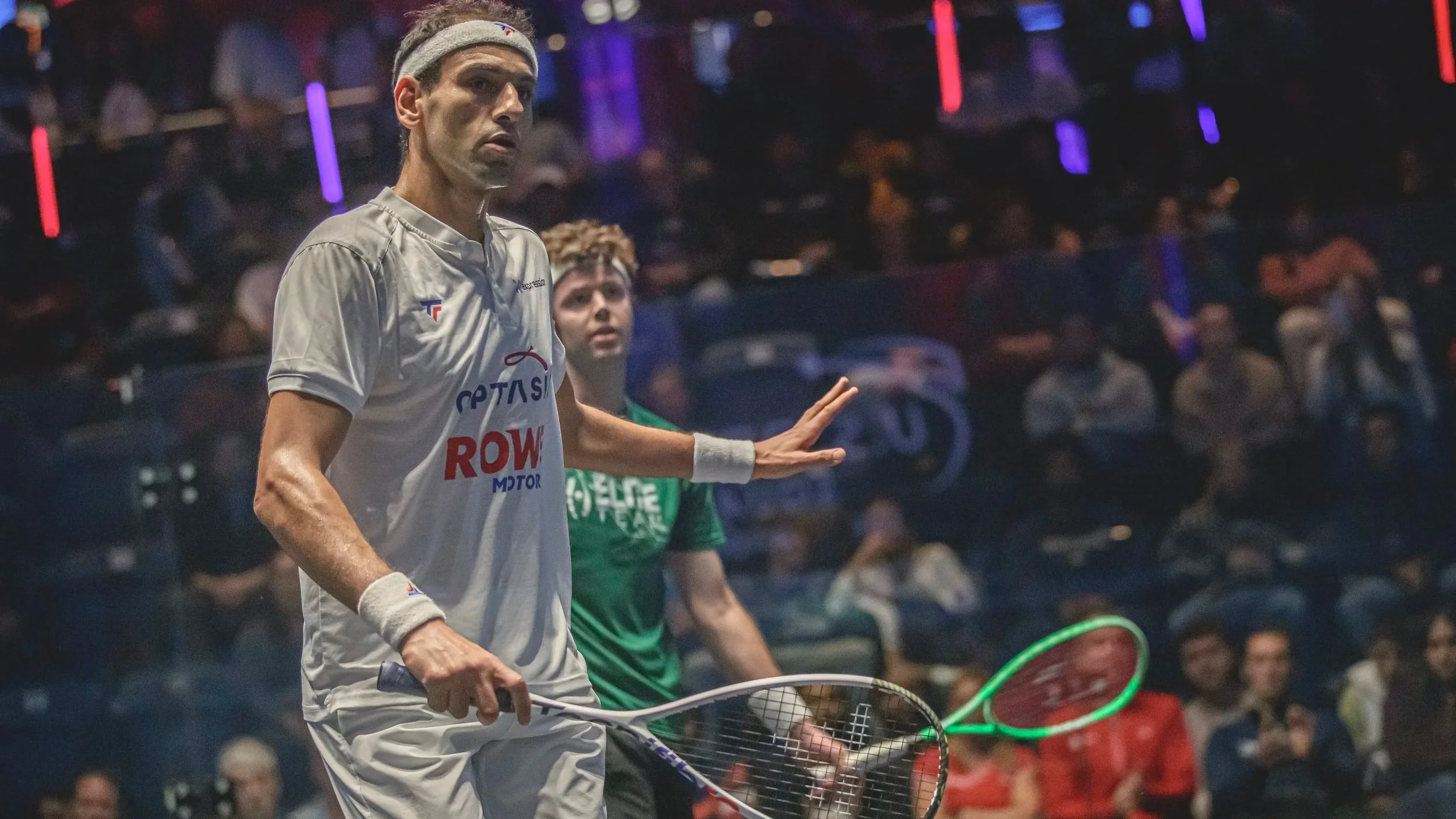
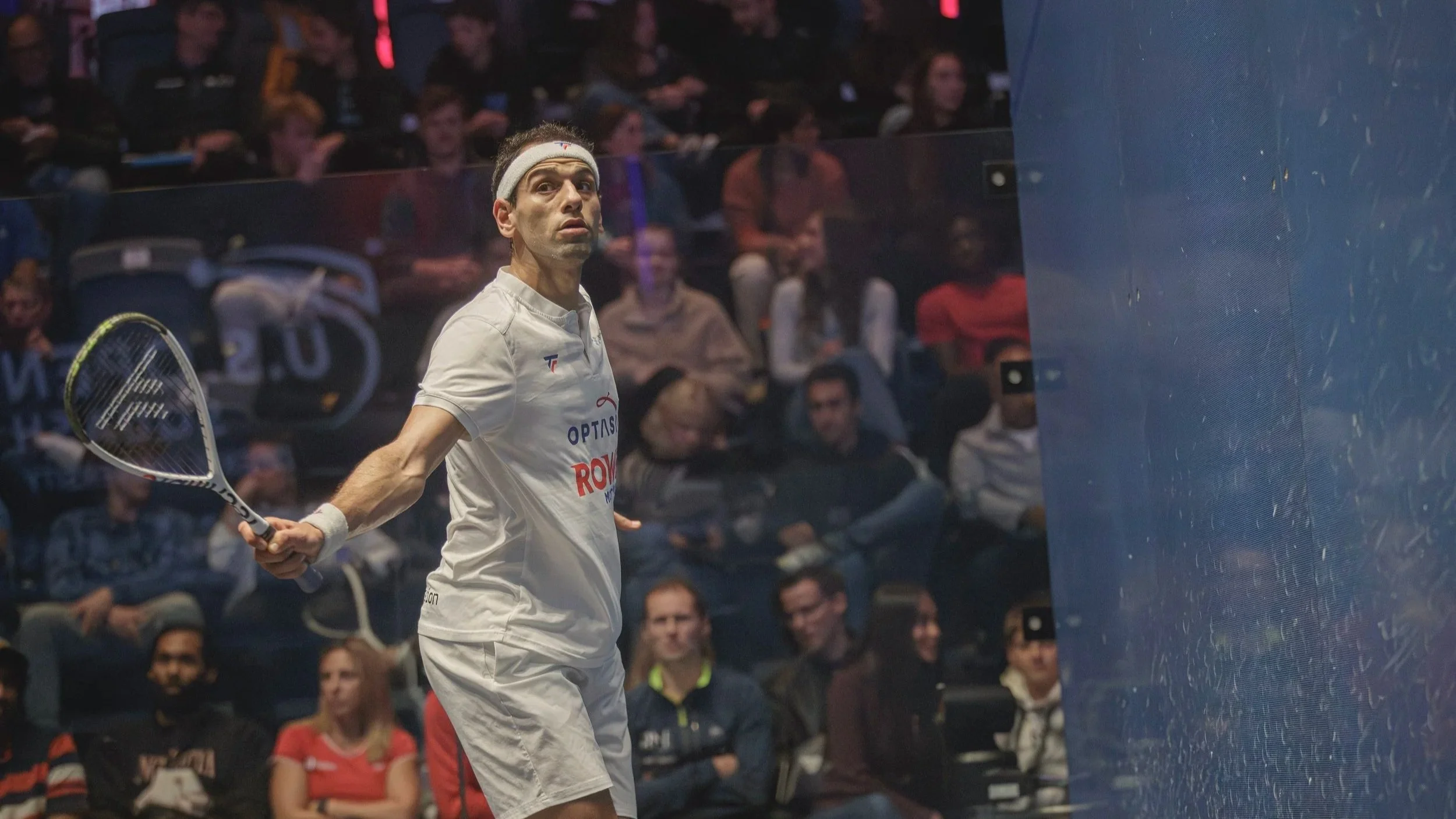
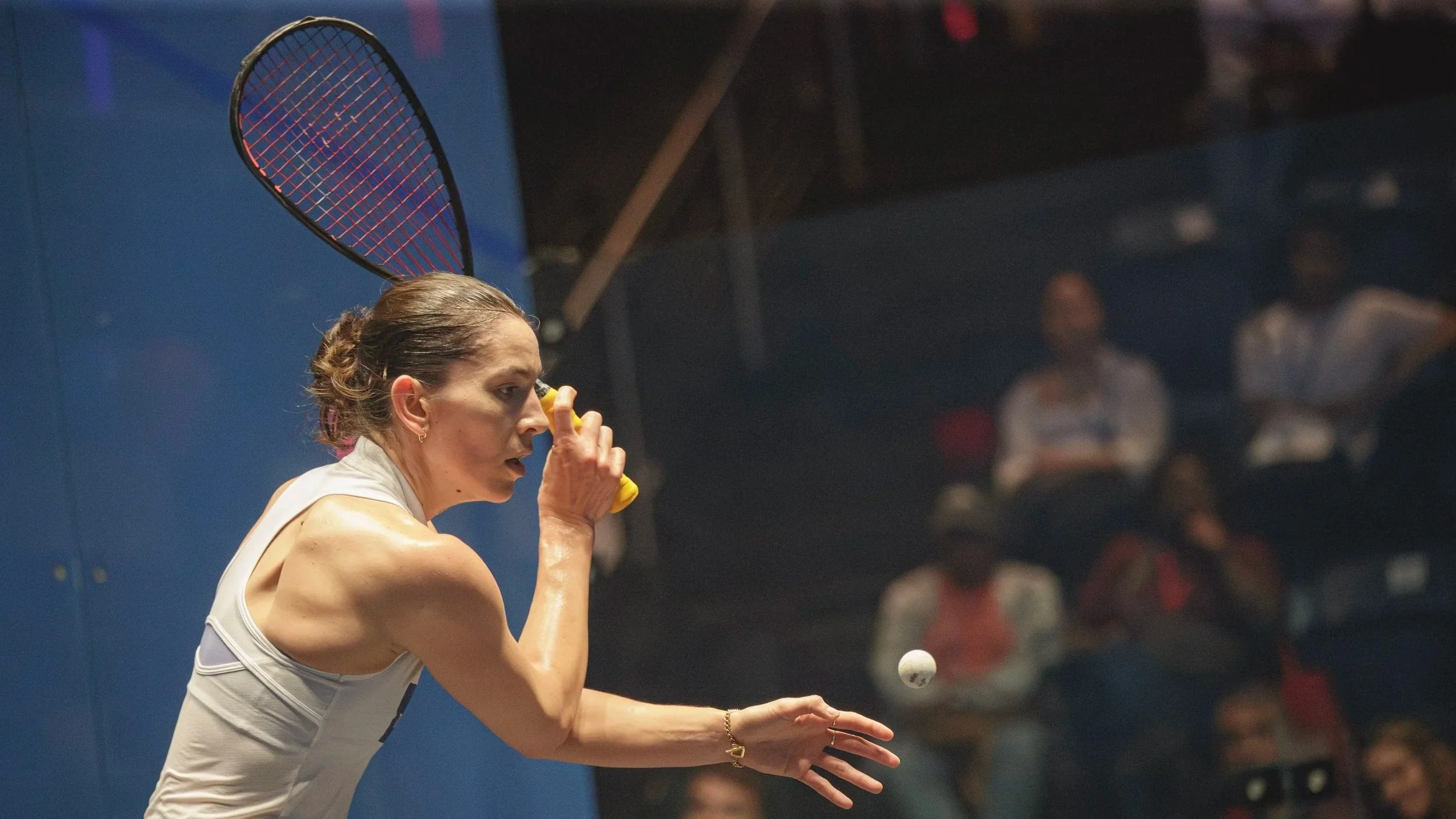
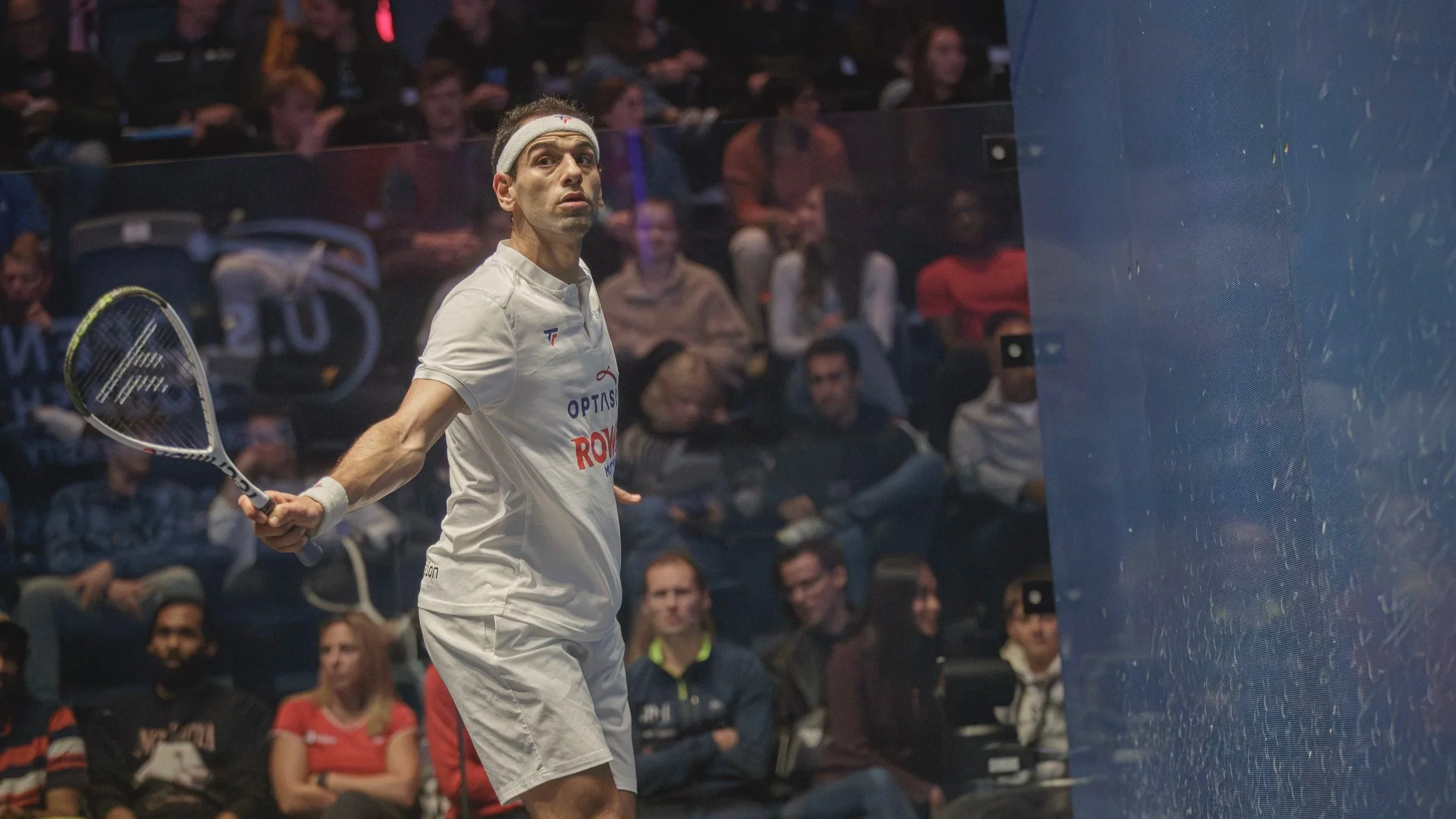
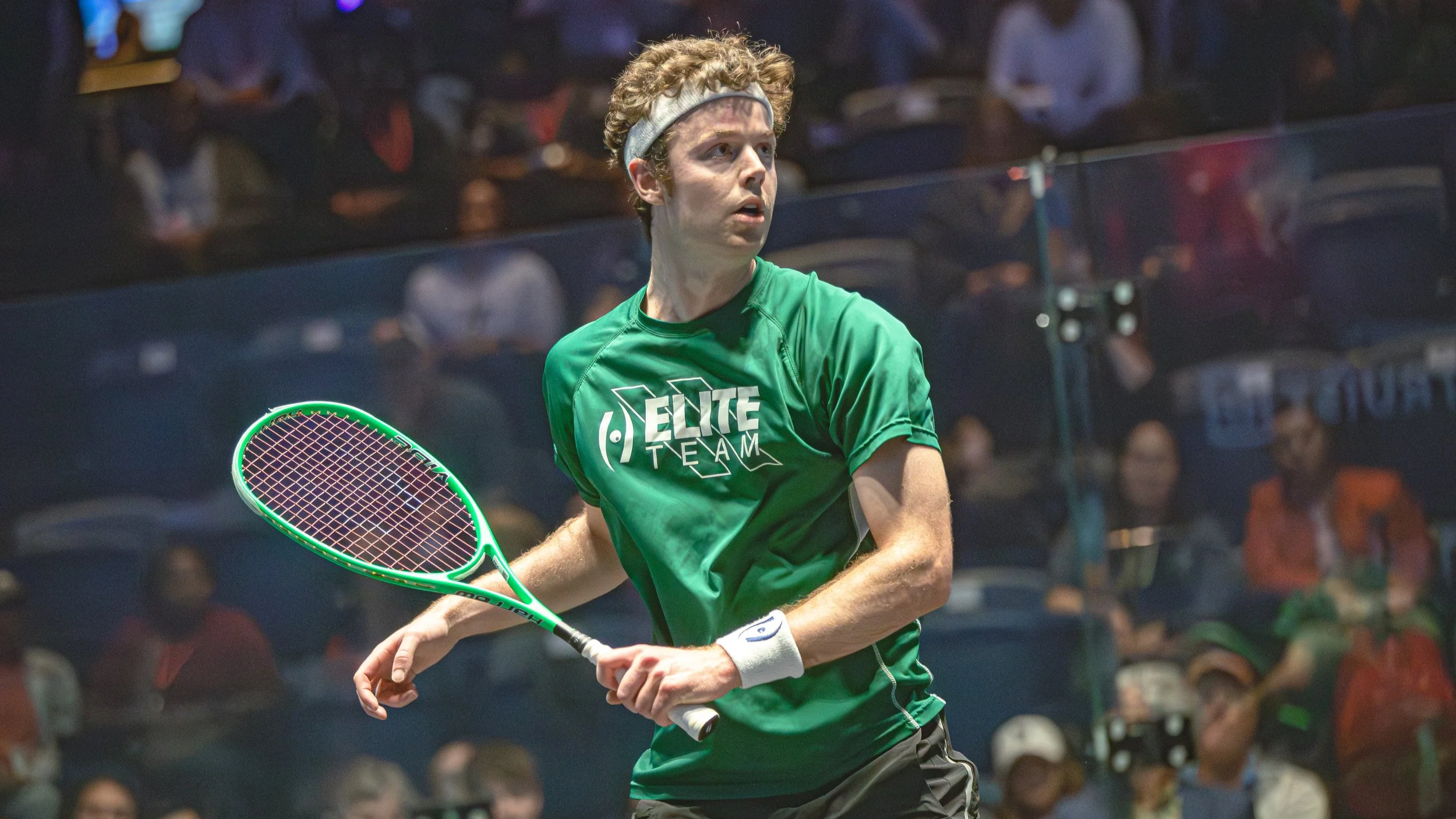
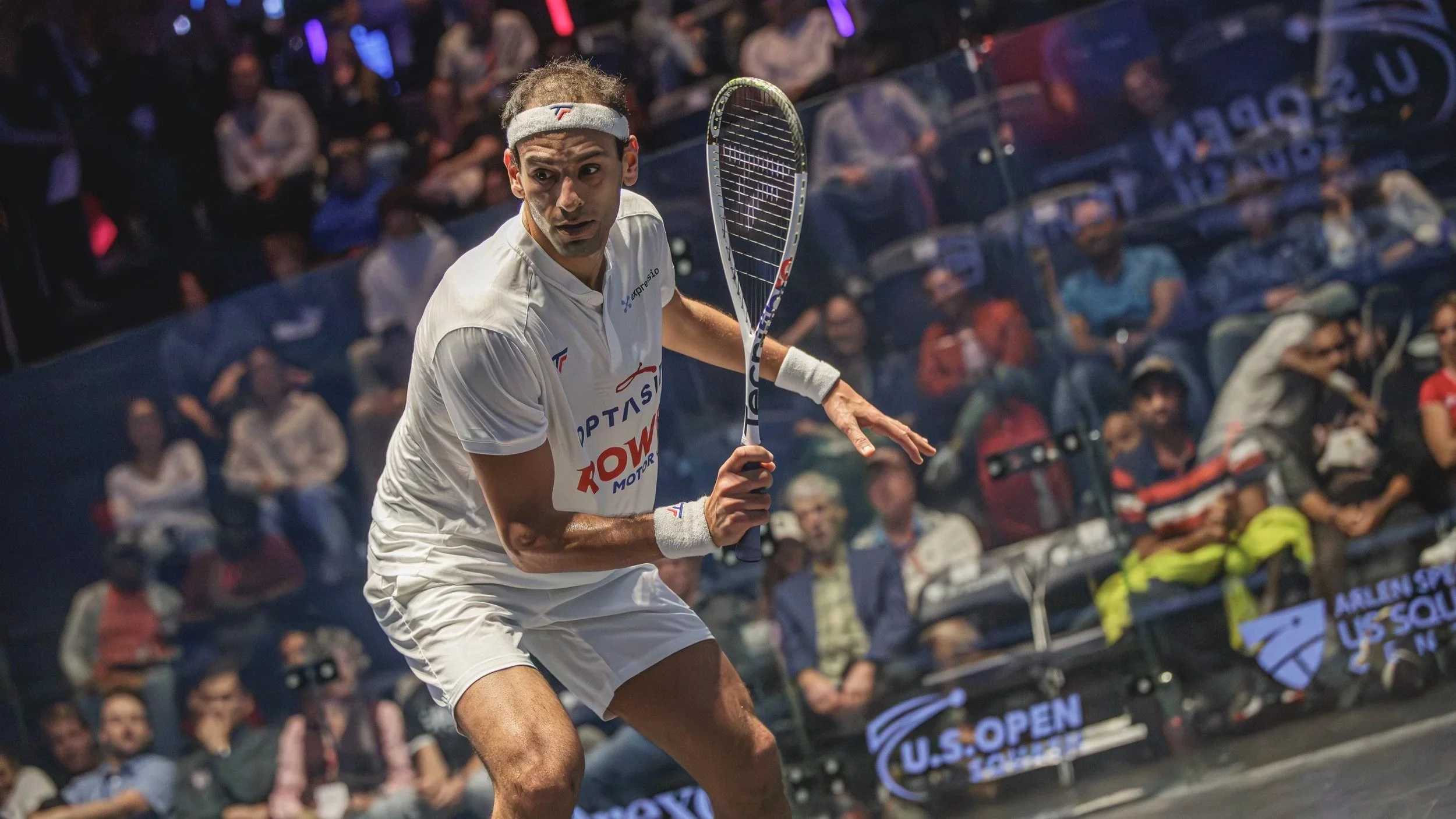
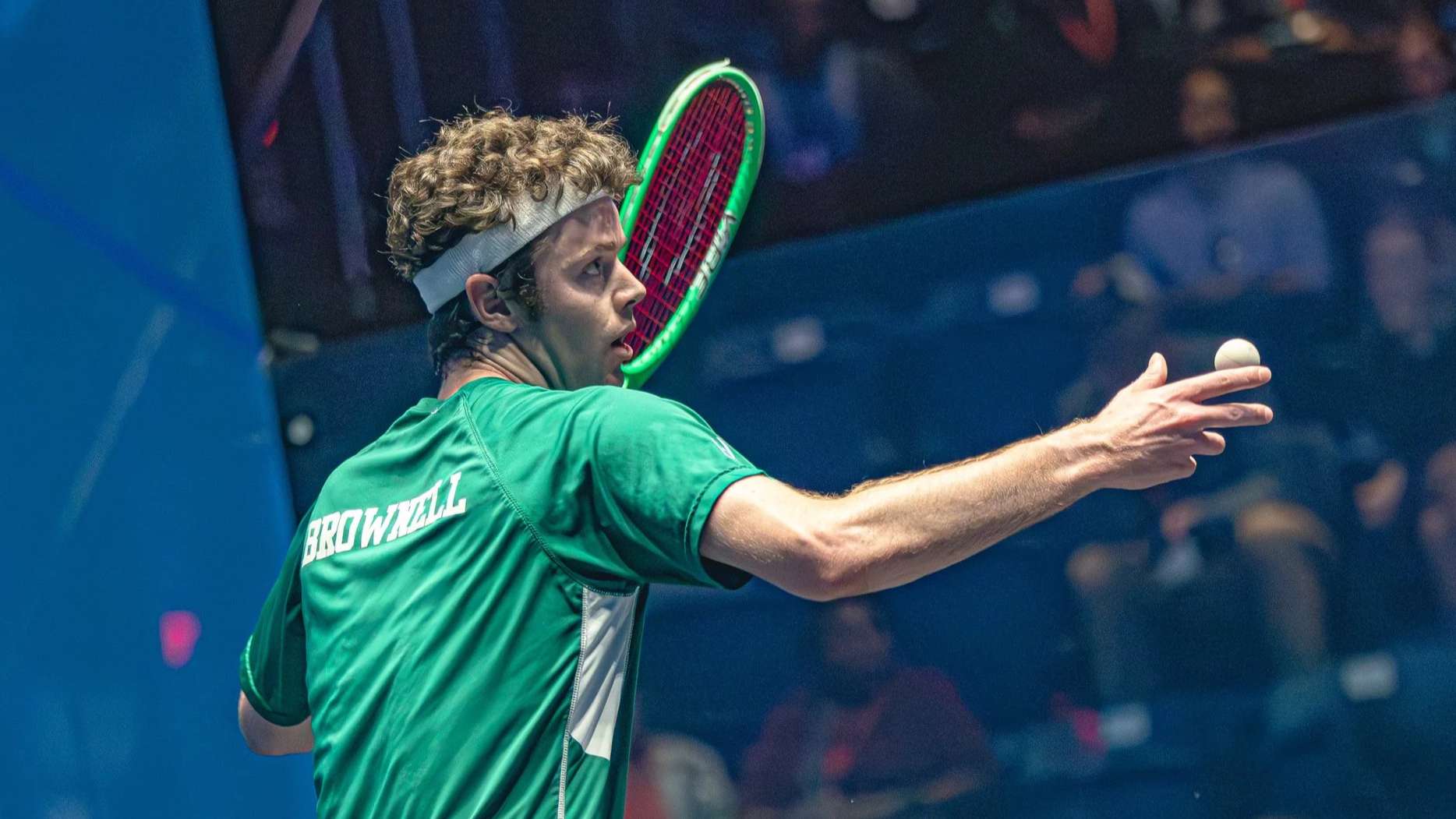
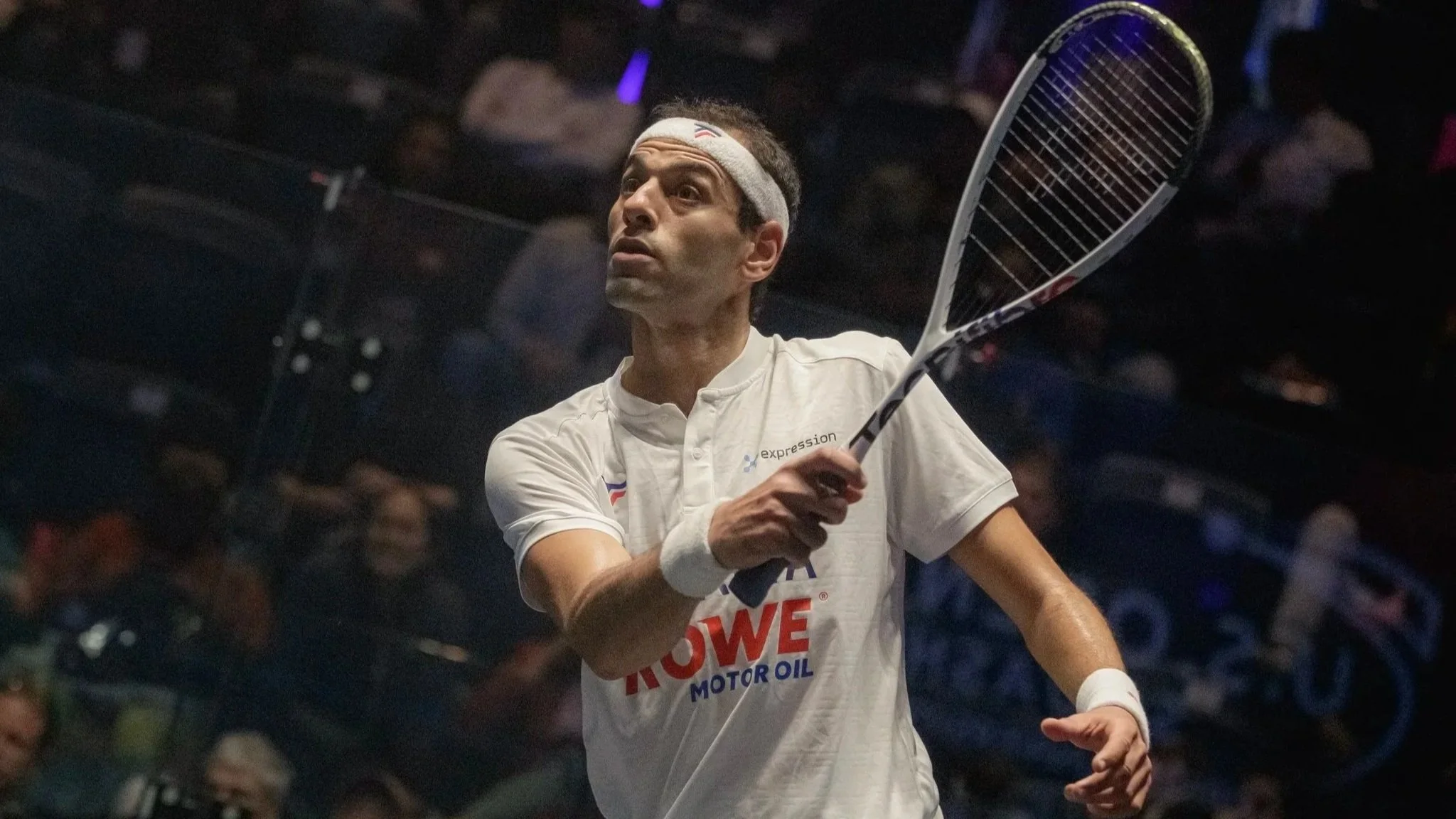
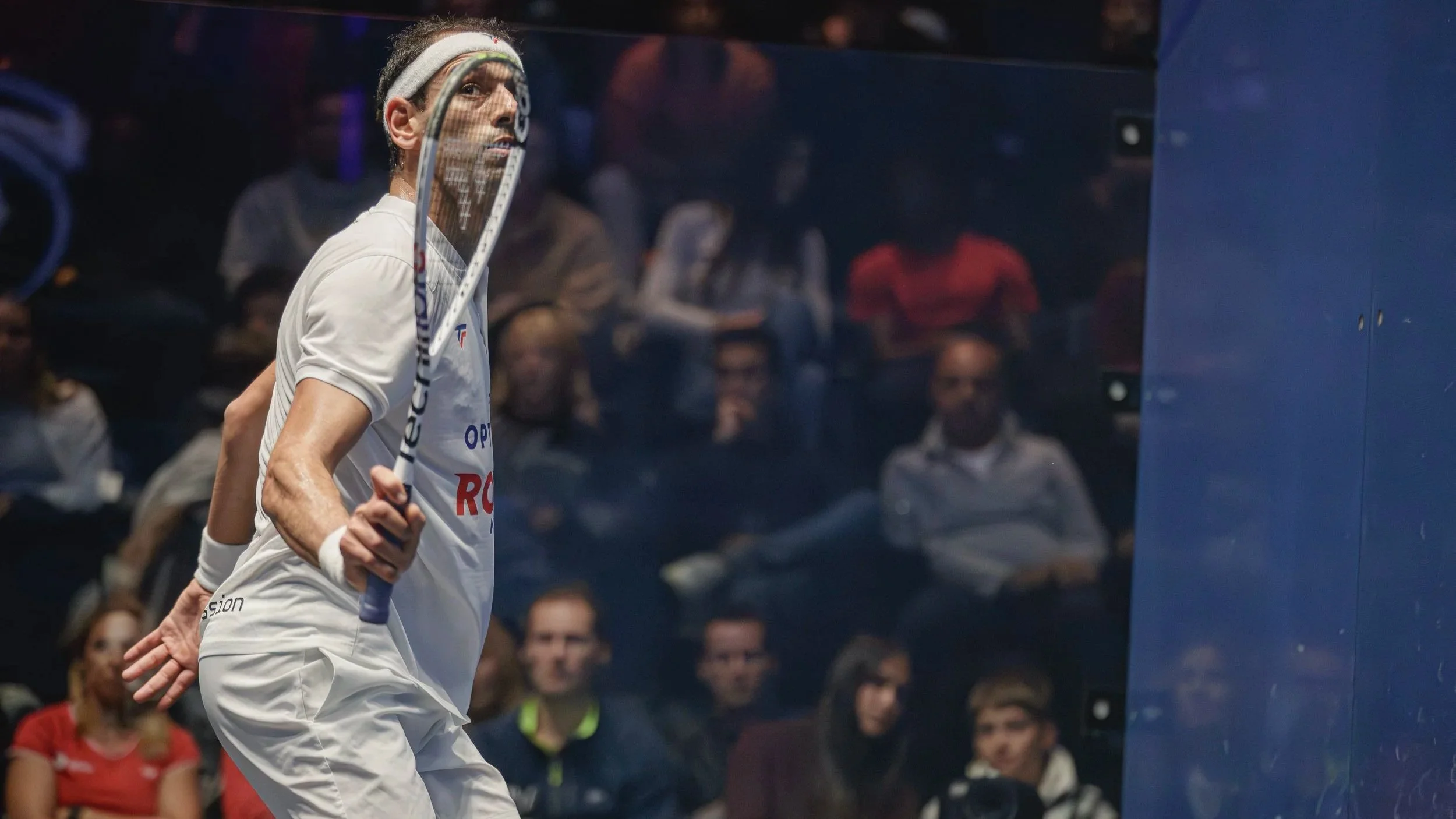
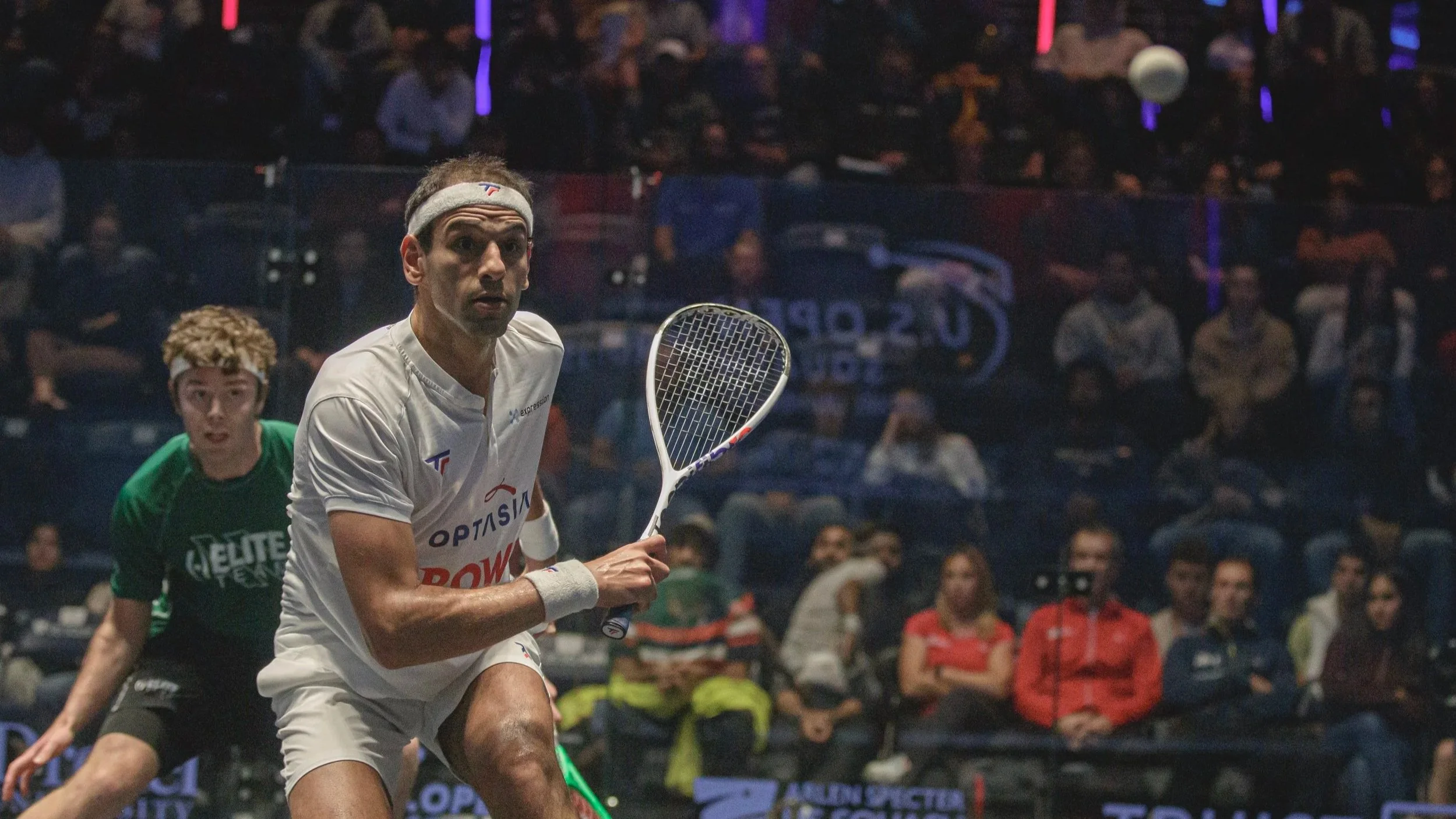
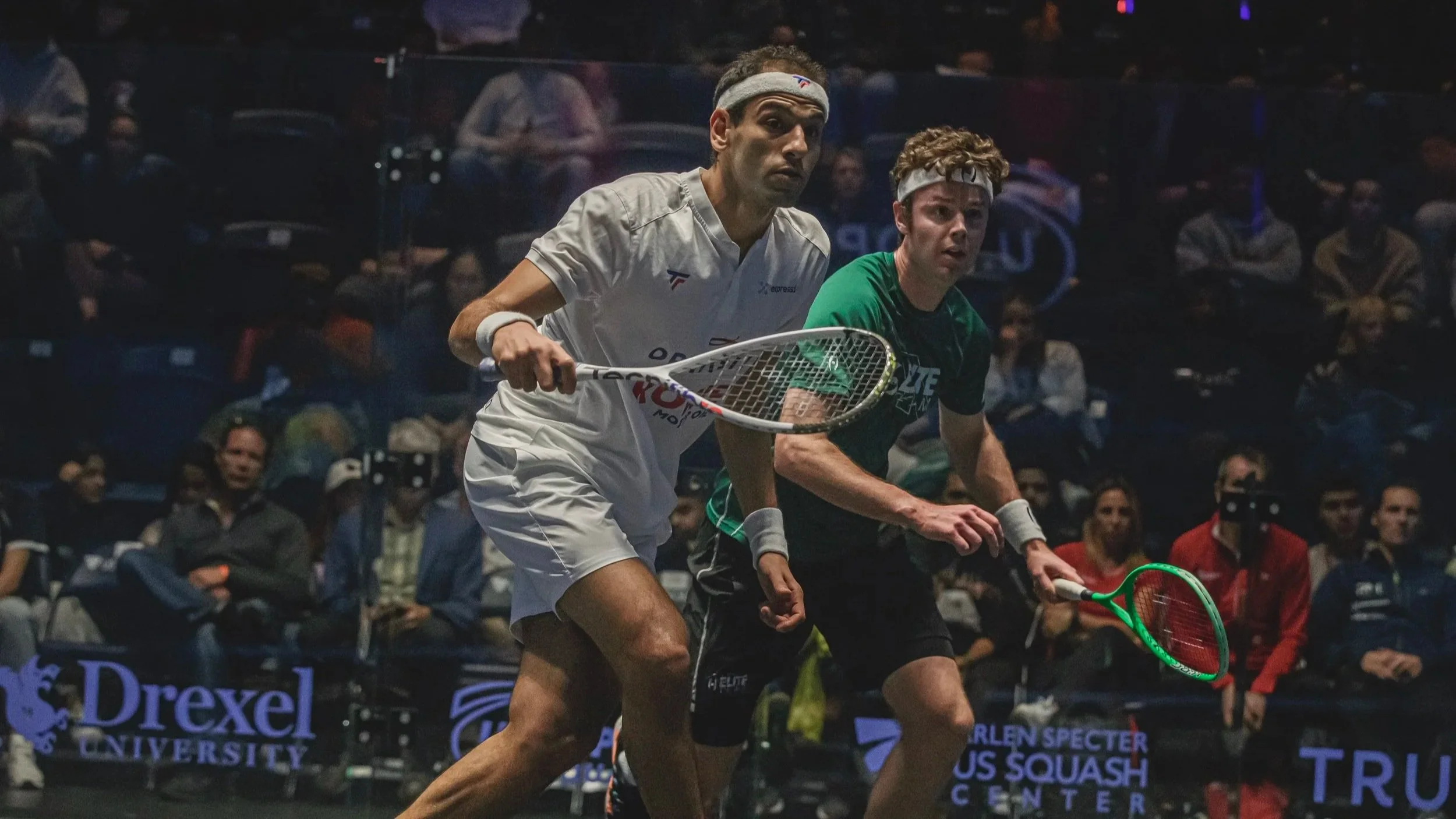
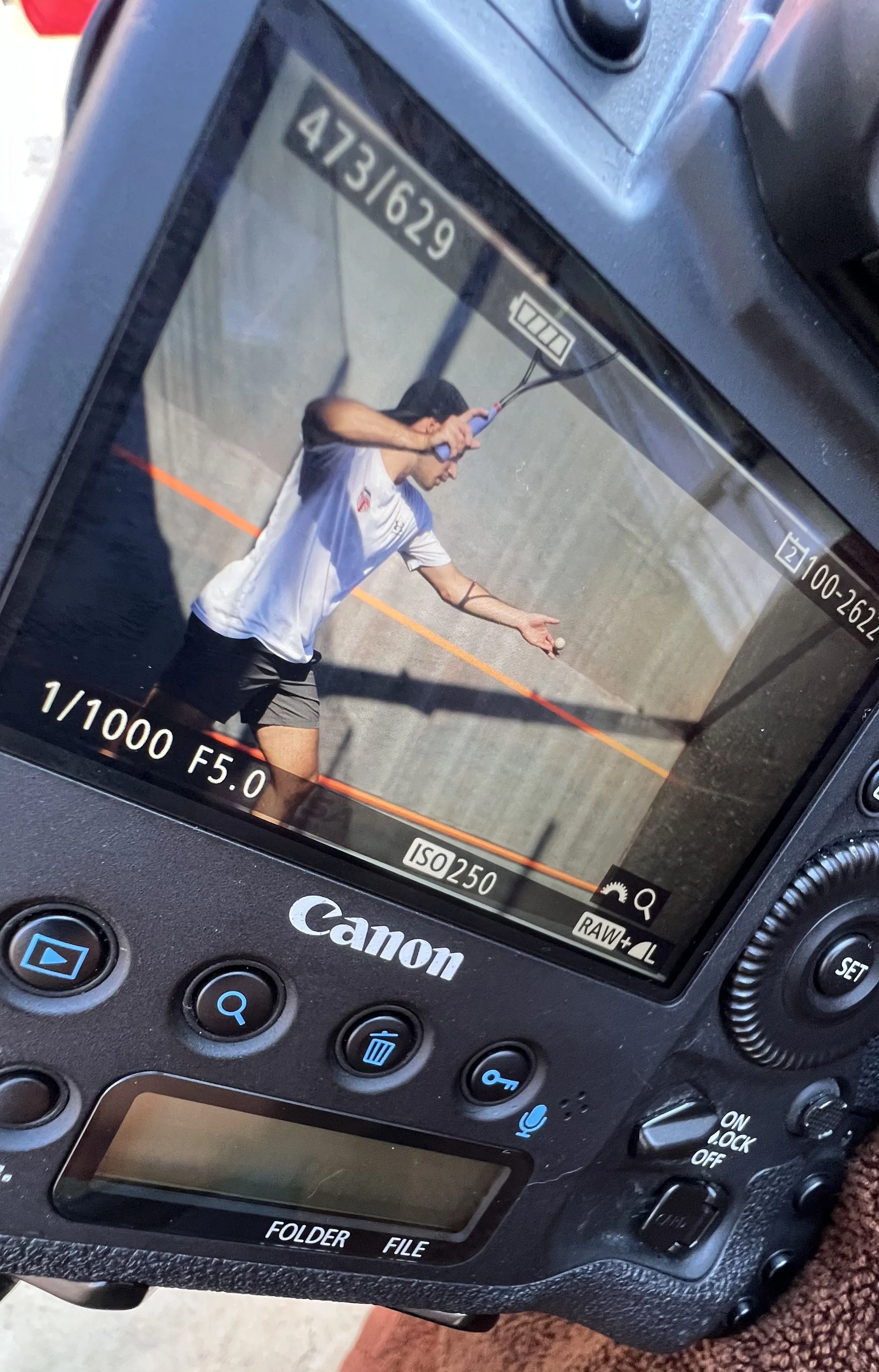
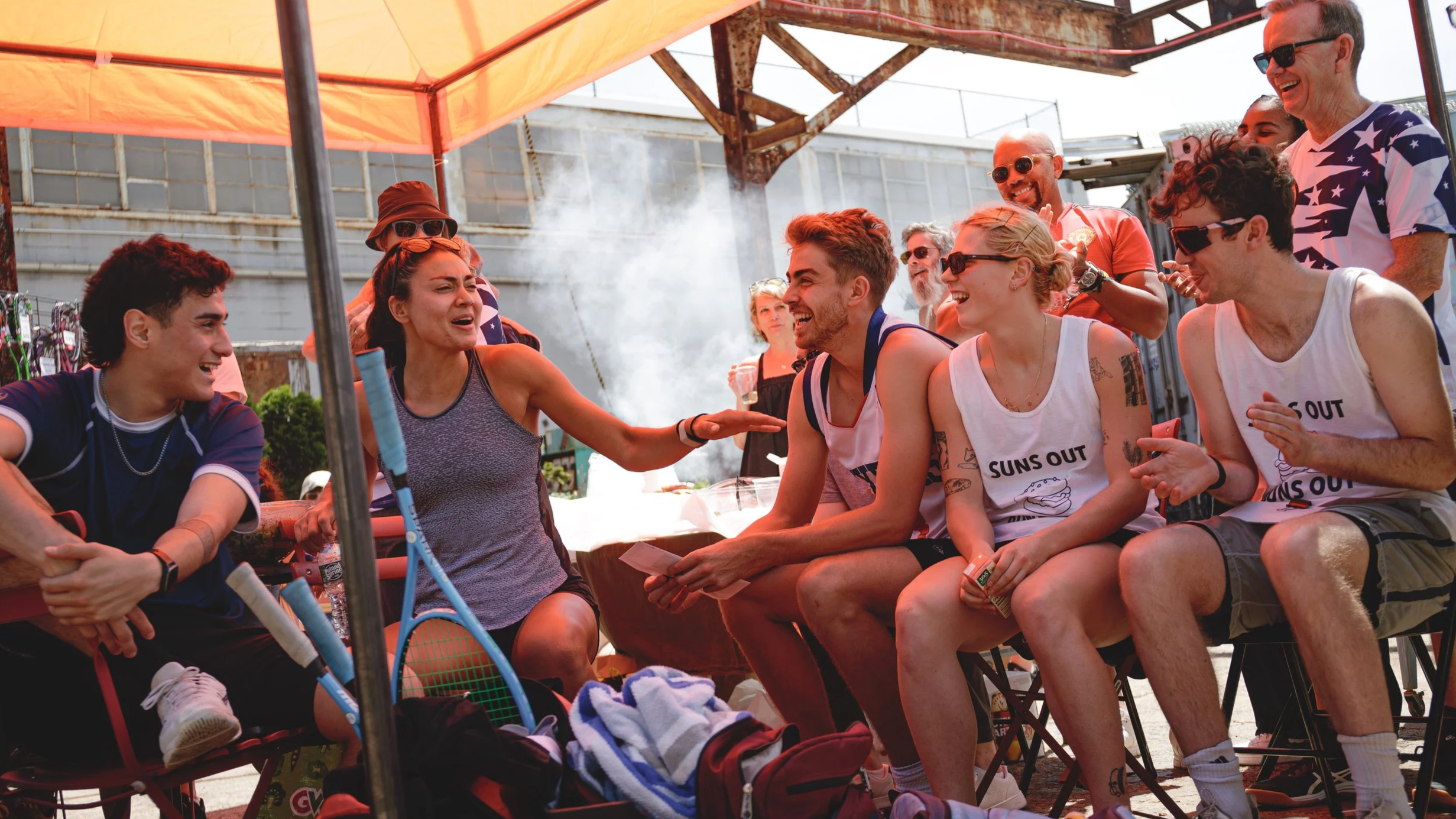
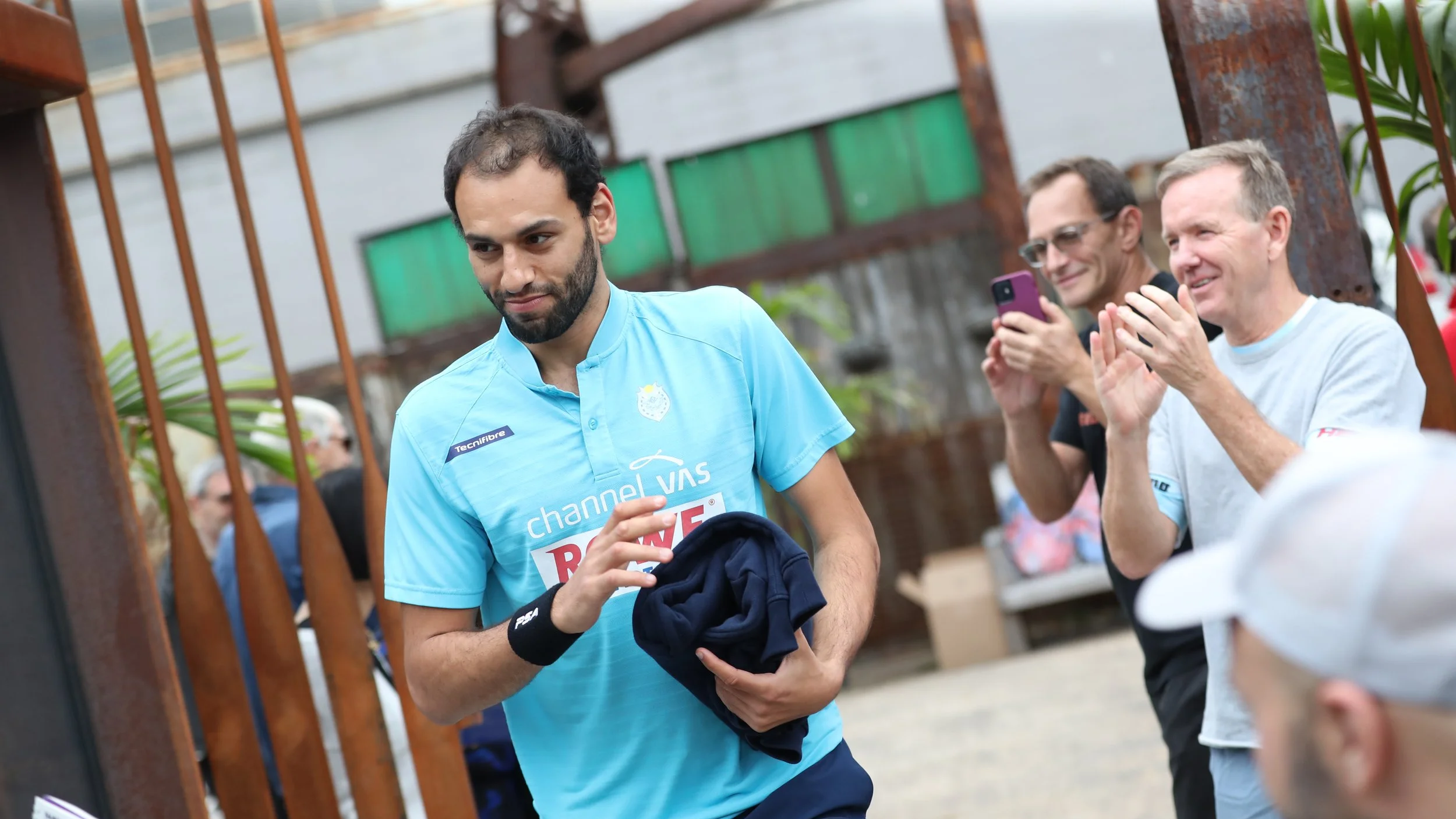
I call Maspeth Squash my home court for squash because this collective we have is my facilitator, urging me to enjoy the sport in meaningful ways. Firstly, the most obvious thing for me to love is…the court is outdoors. Transitioning to deal with the elements was never a thing for me, so playing squash in the open air made sense to my spirit. Secondly, this crew has been hyping squash to me since day one. Each year, building on the collective foundation of our uniquely fun events. In what is my fifth year here, I still get a deep satisfaction seeing world-class squash professionals, as well as some intense squash program kids, and everyone in between get the Steel Court’s magnetic appeal. Making even more sense to my spirit is contributing to the production of our unique events, consequently providing me with opportunities, not only to glean training practices, but also to photograph these elite, continent-traveling athletes (my second experience doing so, regularly, behind glass).
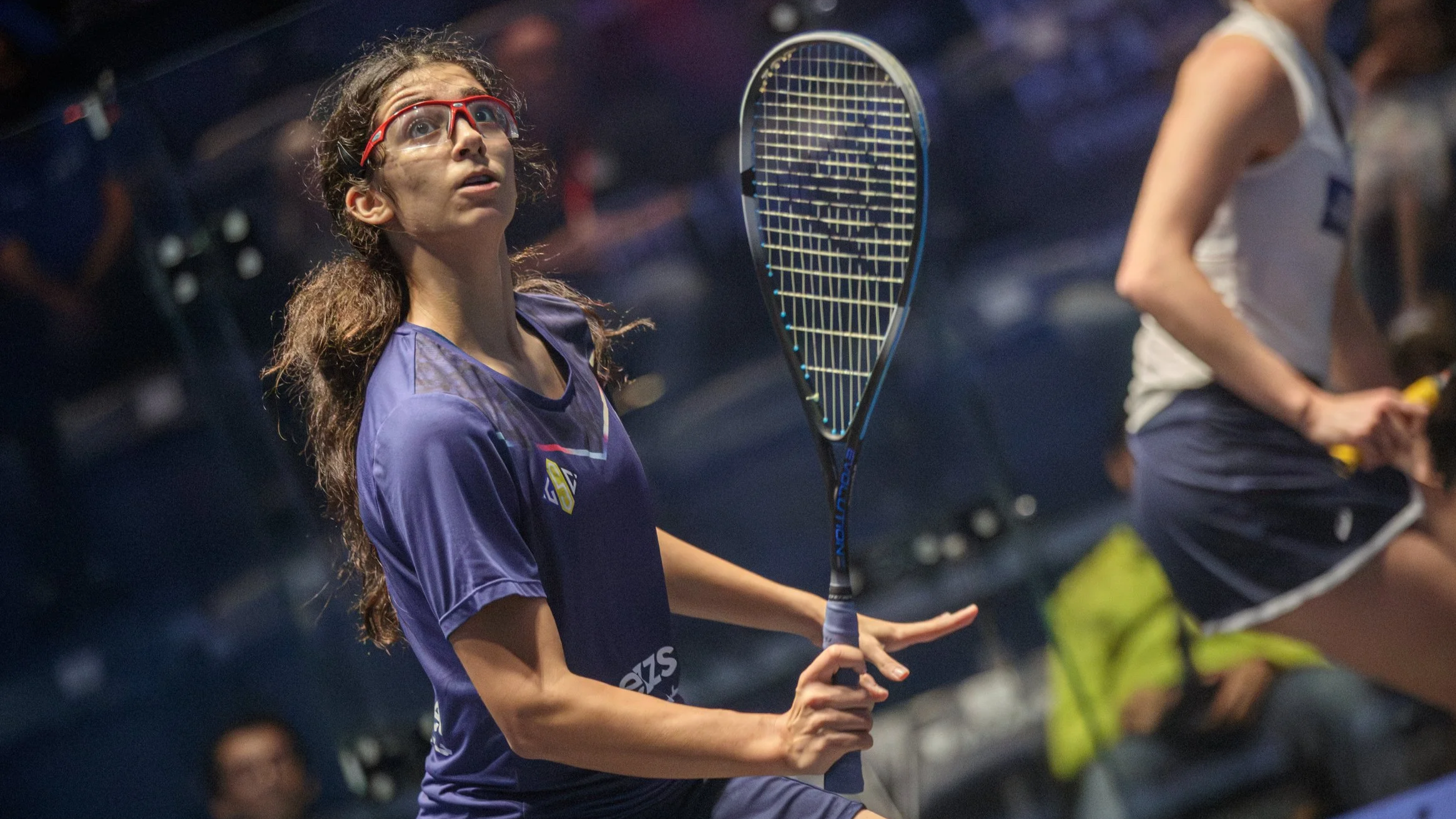
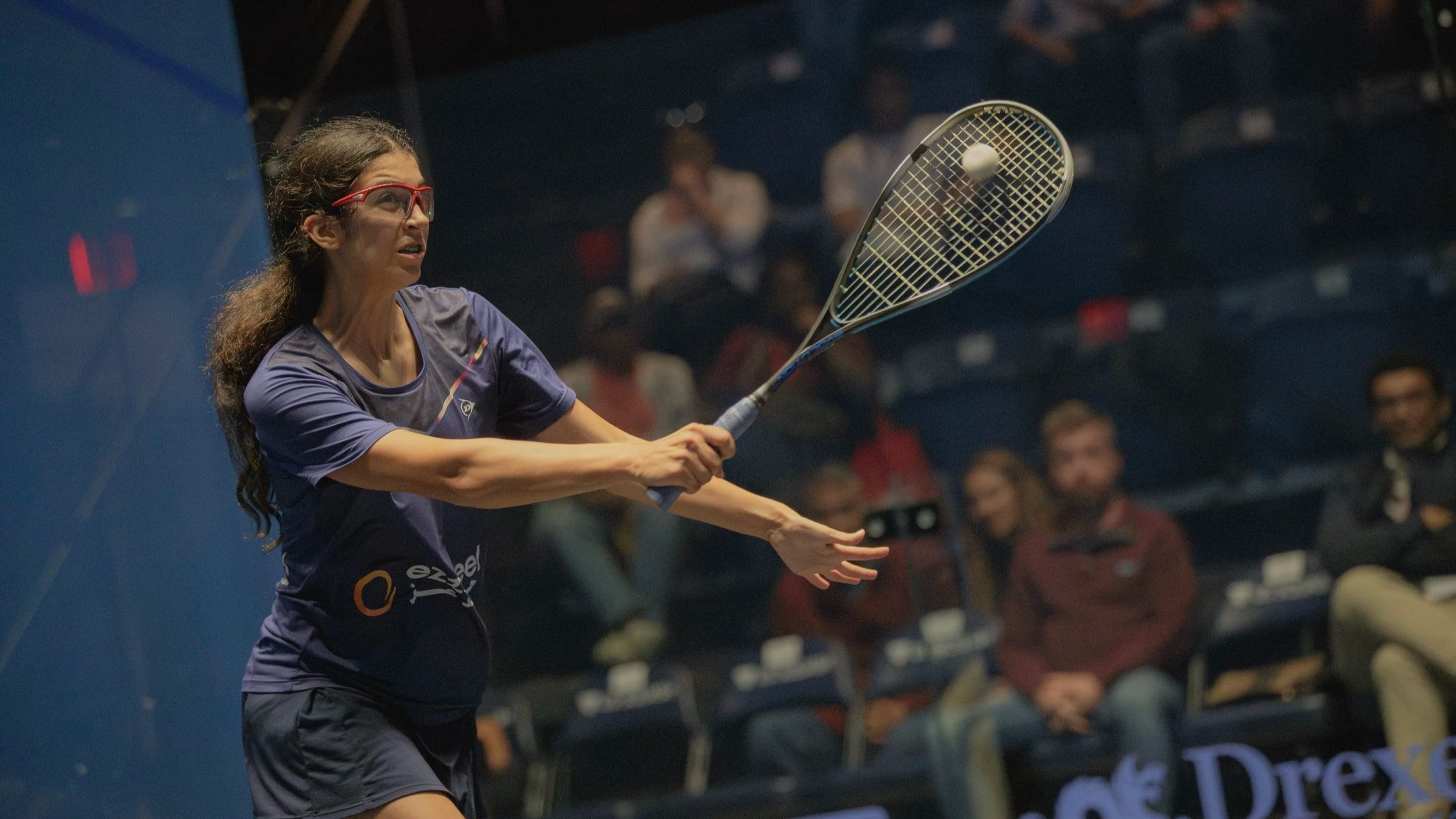
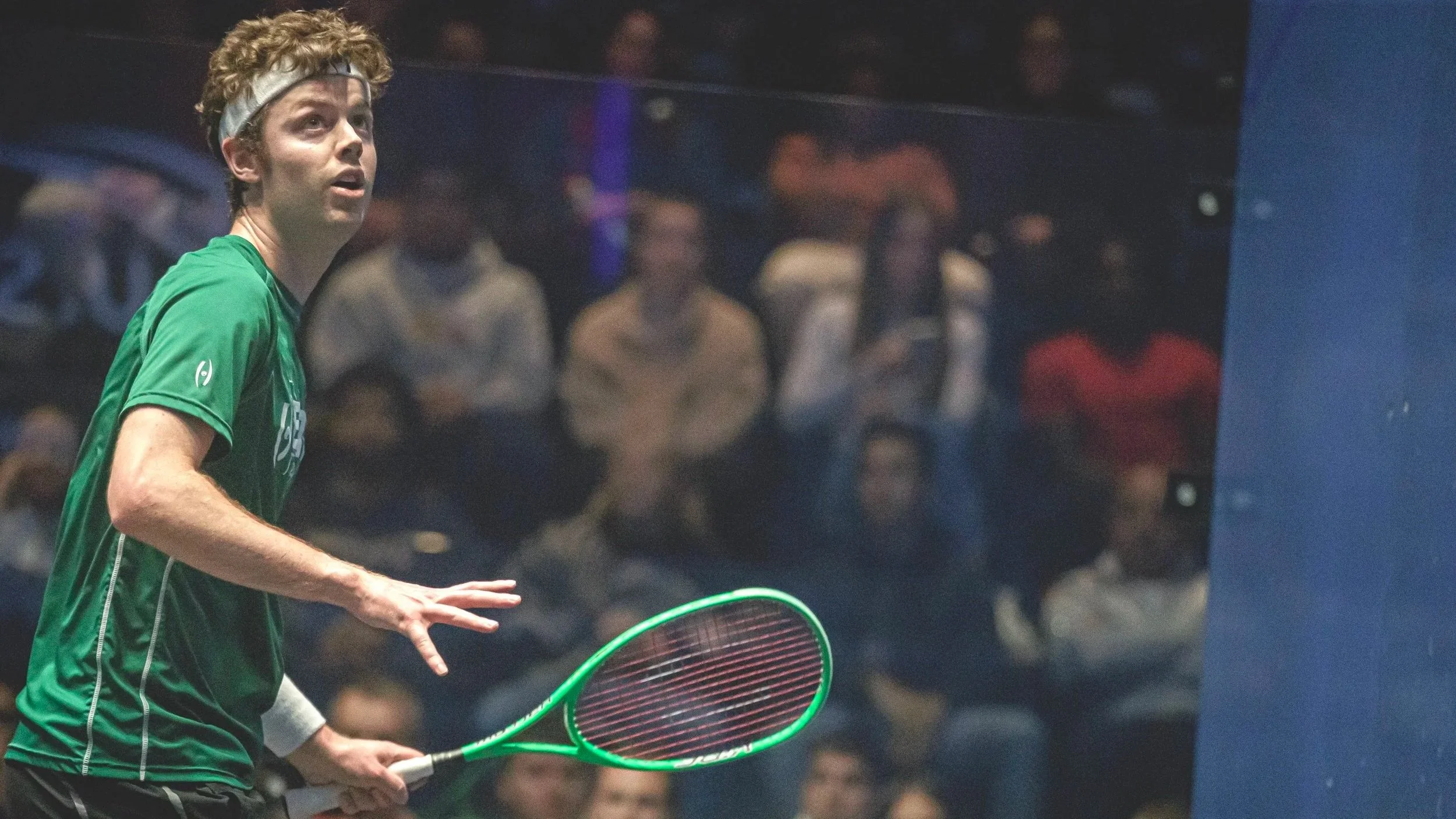
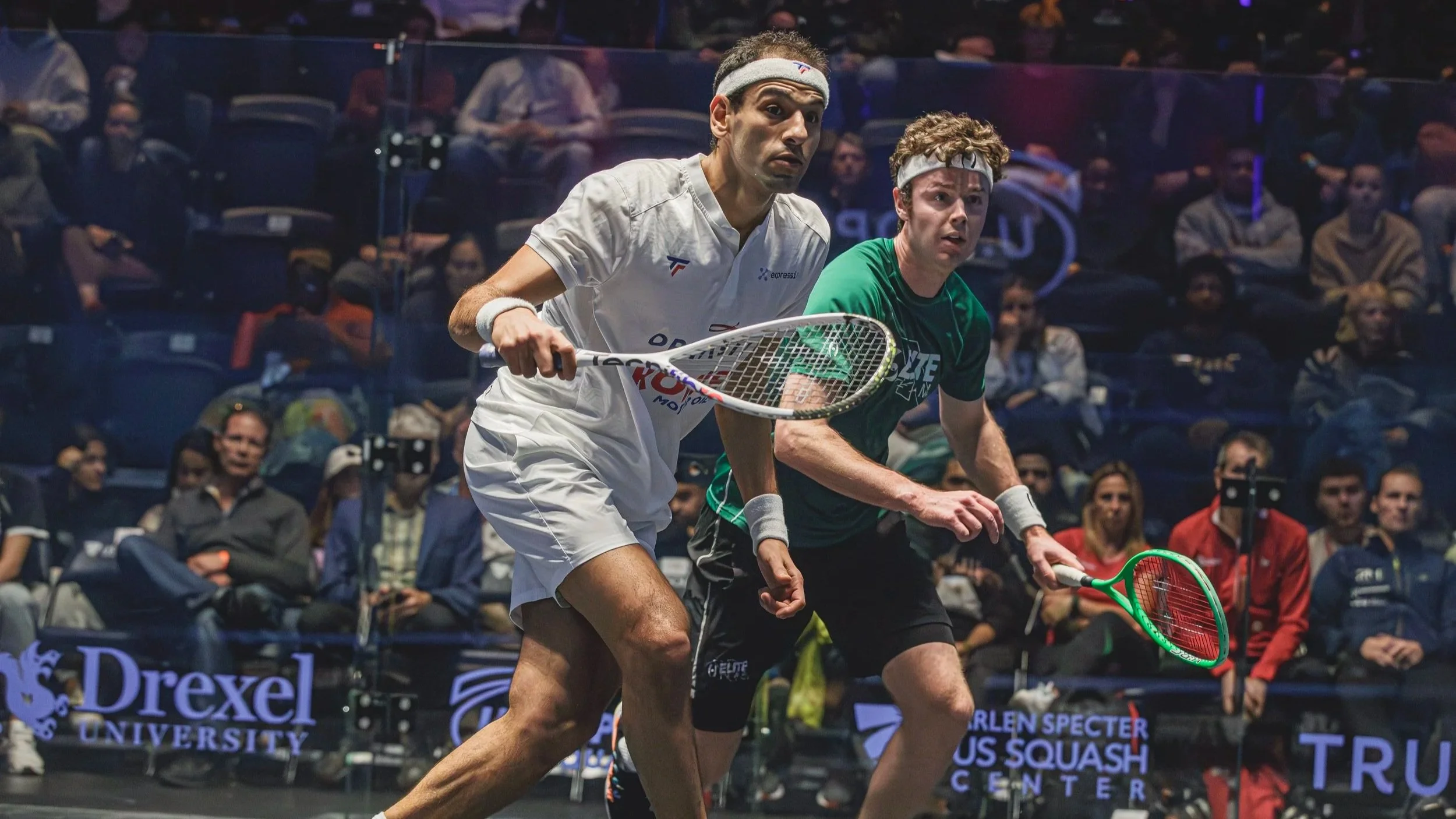
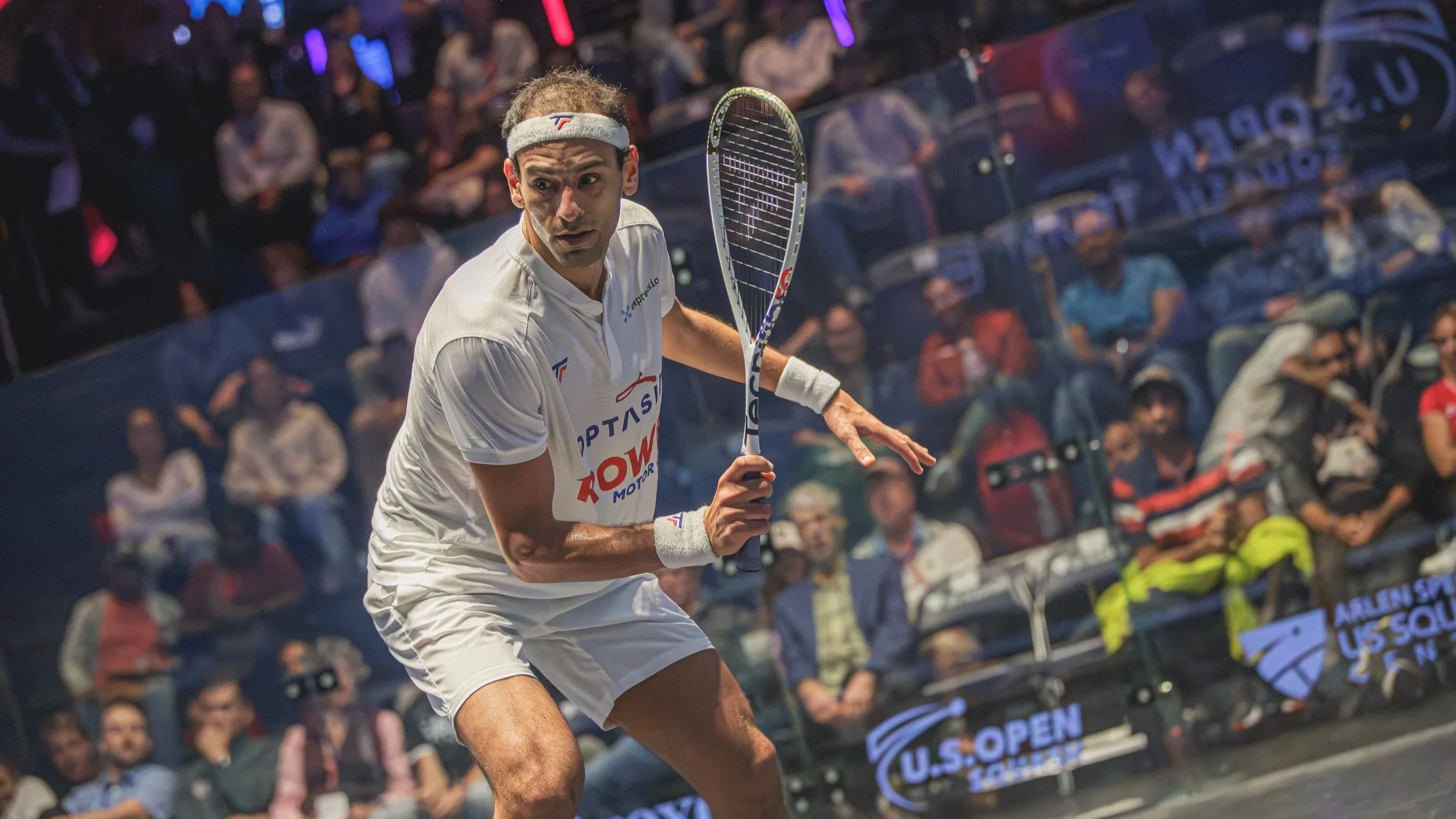
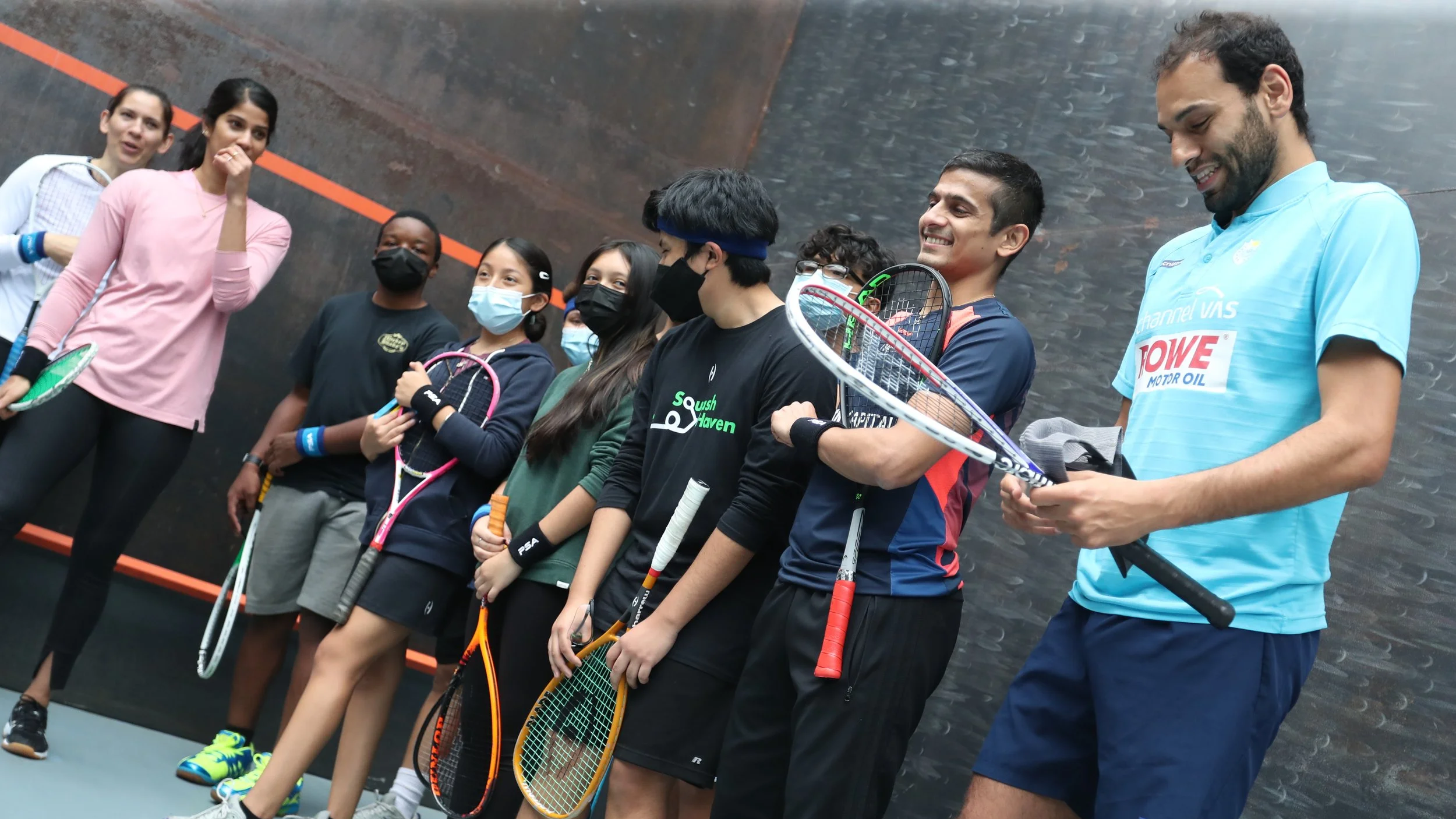
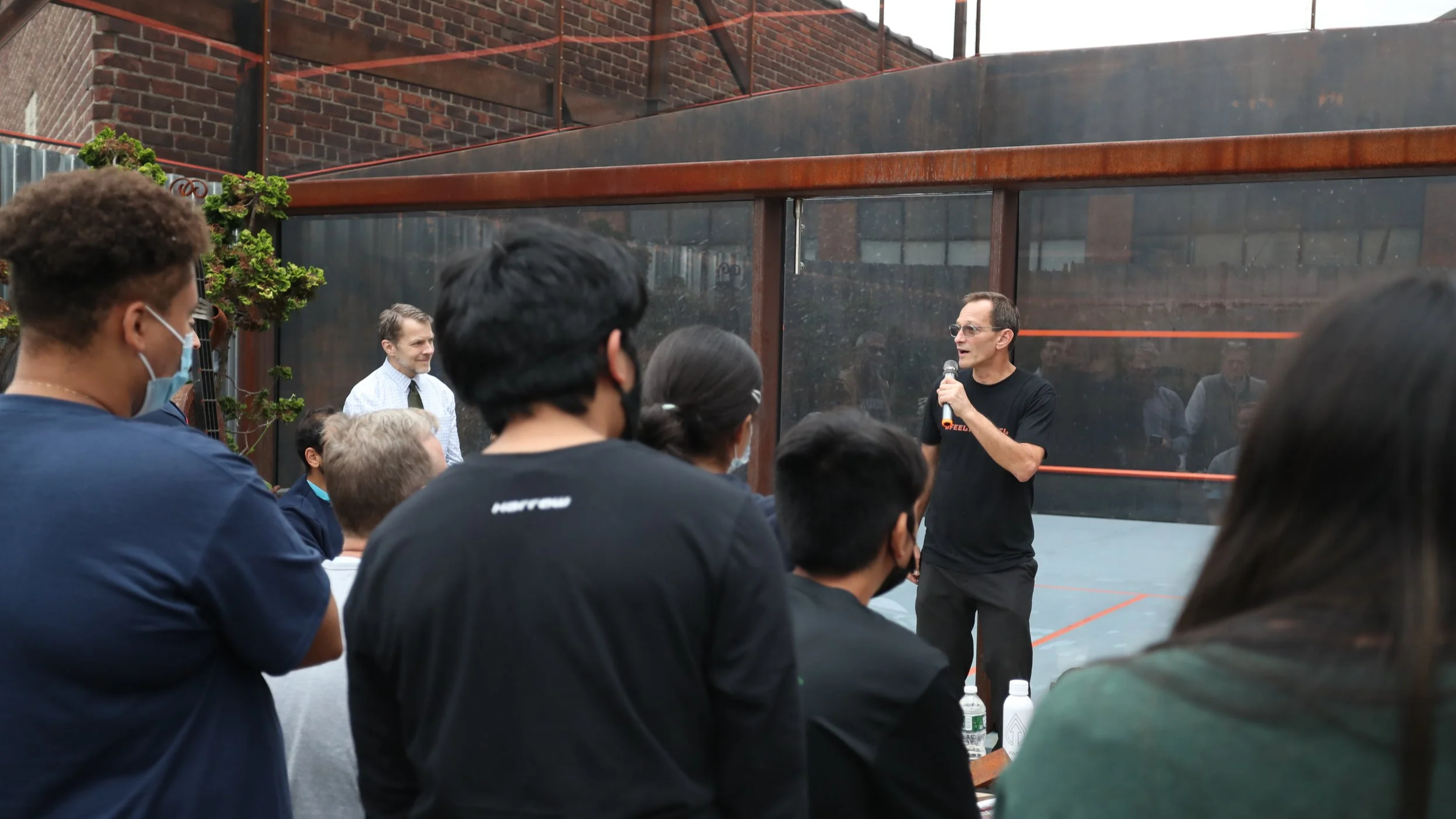
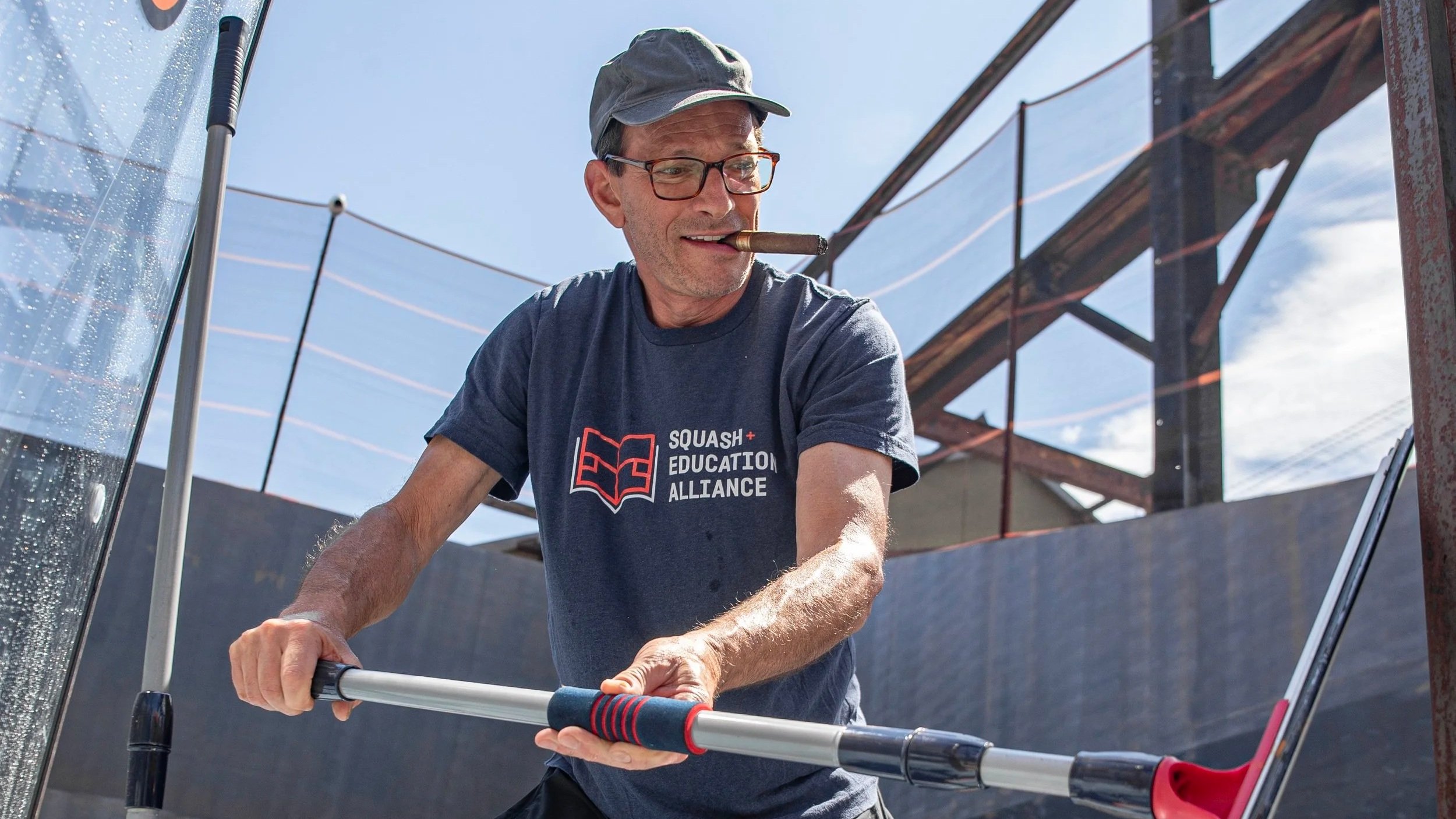
Sir Robert (my moniker for him), for sure, is our Chief Evangelist and indeed, often references squash as a religion. He was first introduced to me remotely by Alan Thatcher (founder of SquashMad), who connected us through a July 2020 email, following their first article about the steel court. Forever encouraging and inclusive, Robert linked me up with short forays away from the court, observing Squash Education Alliance (SEA) programming and occasional visits to the Arlen Specter U.S. Squash Center, resulting in a cool image trove. That SEA has since had The Steel Court replicated, standing it alongside their new endeavor, SquashBridge, is amazing to me. Going collectively on…seeing Vera transform from a beginner into a globe-trotting skills division competitor and dedicated squash head, at such an accelerated pace...it’s like speaking to a little whirlwind of squash vibing. It’s always all about who’s hitting on the court, the recent improvement, or what event is lined up for us here. It really is. Upon returning from this Florida trip, tanned and refreshed, I checked in on Jeff in his office. Thinking he wasn’t in, I turned to leave, then heard him say my name. He walked out of his office closet with summer shorts on, mind you, it’s December. He had a morning squash session and was bringing me up to speed on how the floor’s heating system was working. After a quick catch-up, he mentioned Manuel Neuer, in analogy to my mindset. I had to look him up… a legendary goalkeeper in reference to his dedicated mental comeback after a devastating leg injury… Jeff often has a quick way of expounding his points. You can also see Jeff’s eyes genuinely light up when he talks about the court he built. Getting to the heart of the question, “Why the steel court?” is easy here, with this group. You can feel the devotion. It is a home for me. My comfort level with this crew and with the game of squash runs at peak levels here and plays true on these steel walls.





At The End Of The Day
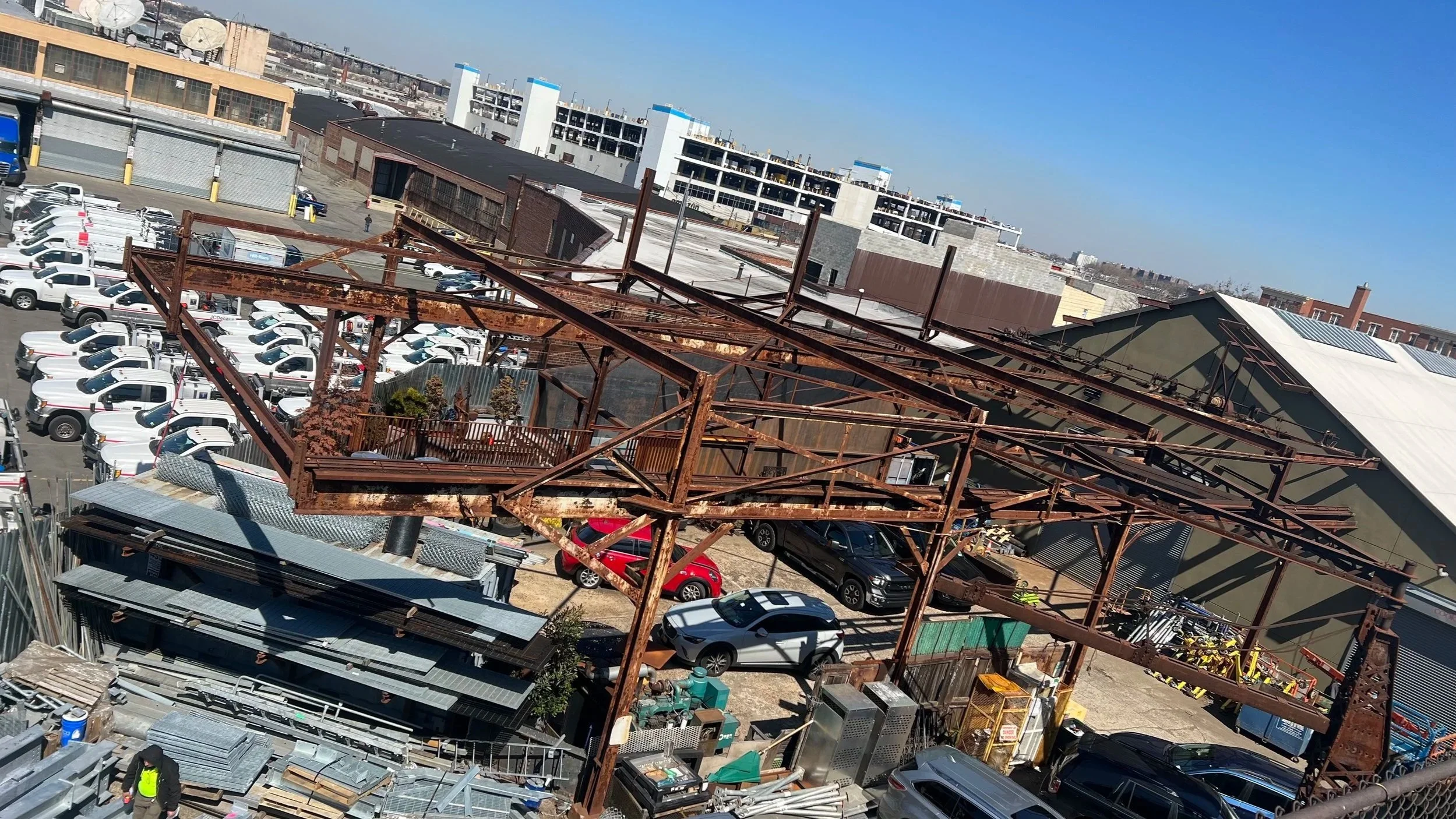
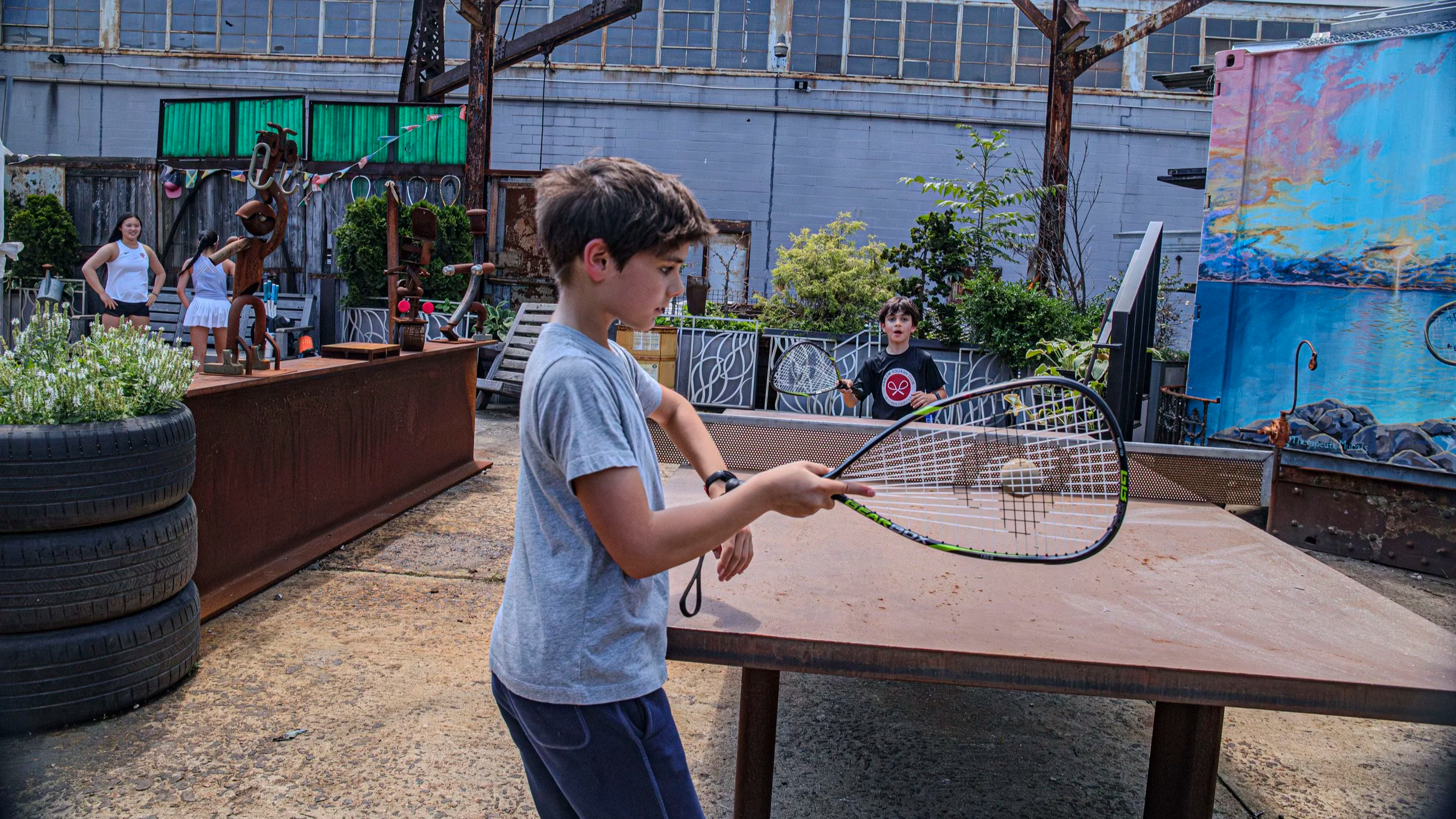
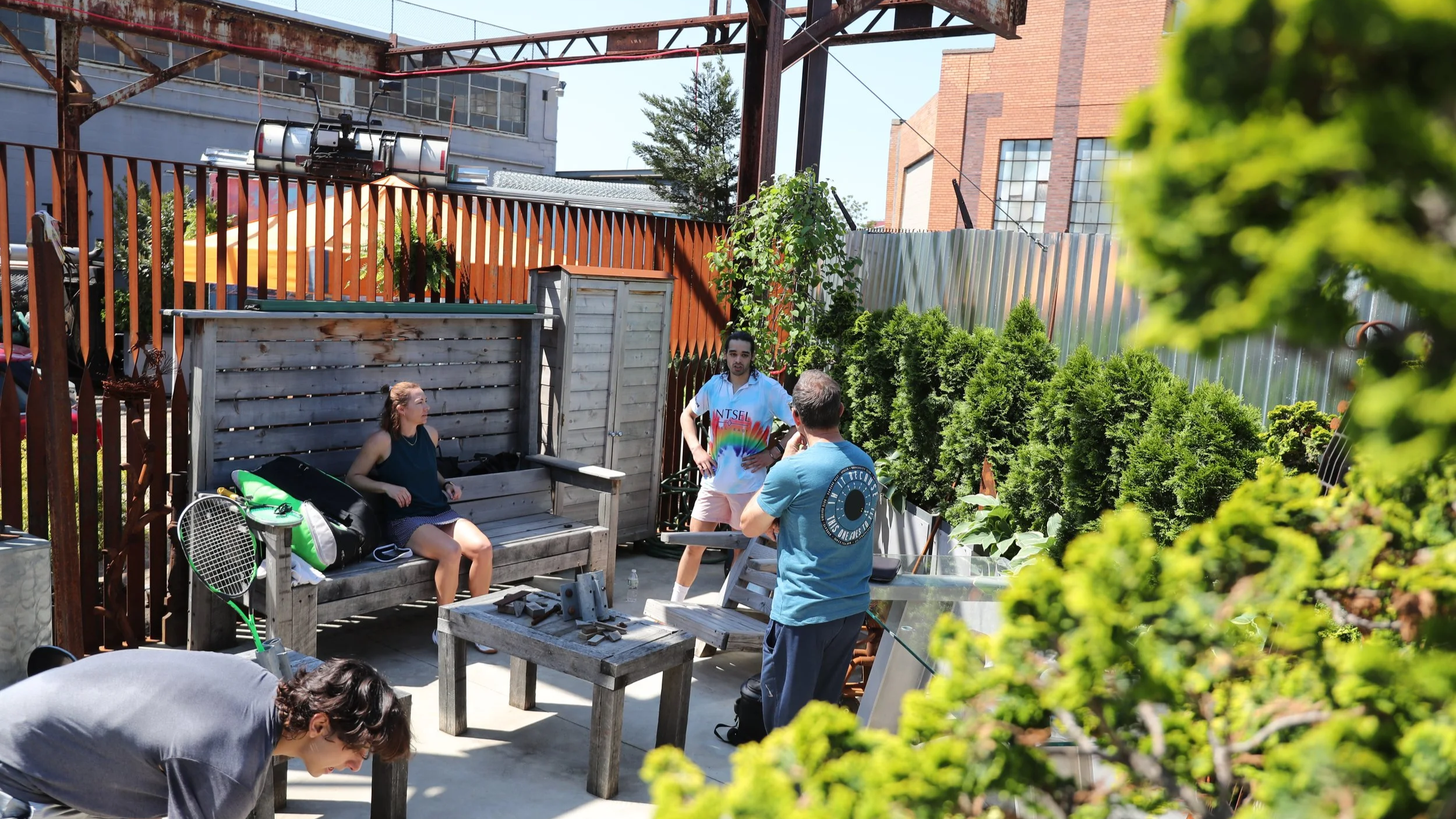
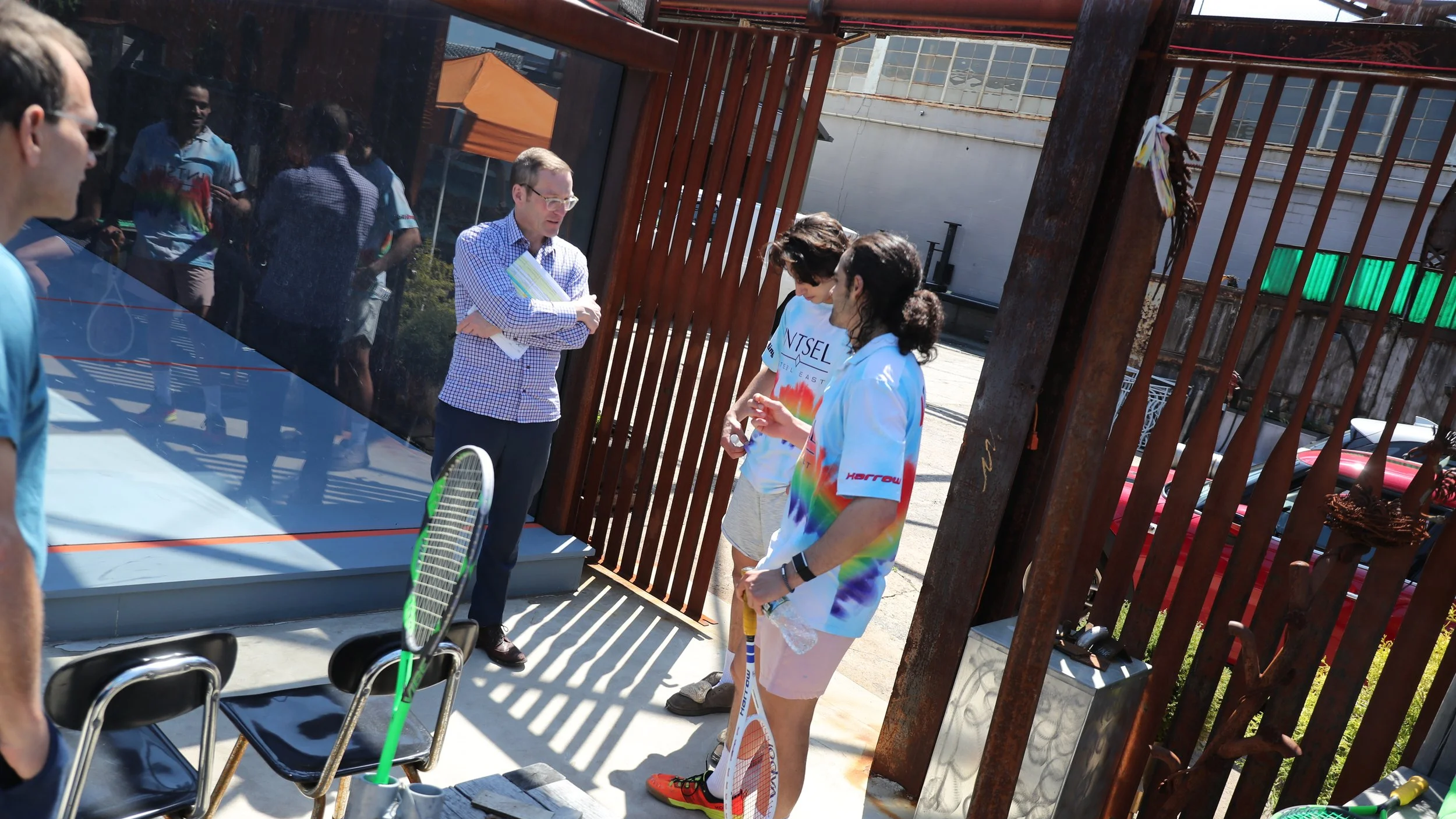
This working sculpture of a squash court is a novelty within New York City’s landscape of squash. In practicality, the events hosted require the same inspiration towards novelty from participants if they are to thrive in this space. As you first view the structure after having gone through the alleyway, the broken concrete reminds you that it’s a space to take care to navigate. The closer one gets to the sliding entrance, the more it starts to feel like a modish backyard city garden, the kind that pepper stylish neighborhoods throughout New York City. Crossing through the door puts you in the footprint of a very different concept of playing outdoor squash. It is a hard, beautifully raised garden. The unsyncopated yet melodic industrial sounds can sometimes ring of prosperity when mixed in with whatever pleasurable sounds you add, and can derive by putting your game up against the smooth steel walls and movement-welcoming, heated floor. At the end of the day, this unconventional showcase for squash is a very private court, with a very public personality.
Add on grabs… Arlen Specter U.S. Squash Center, Home Court for American Squash